

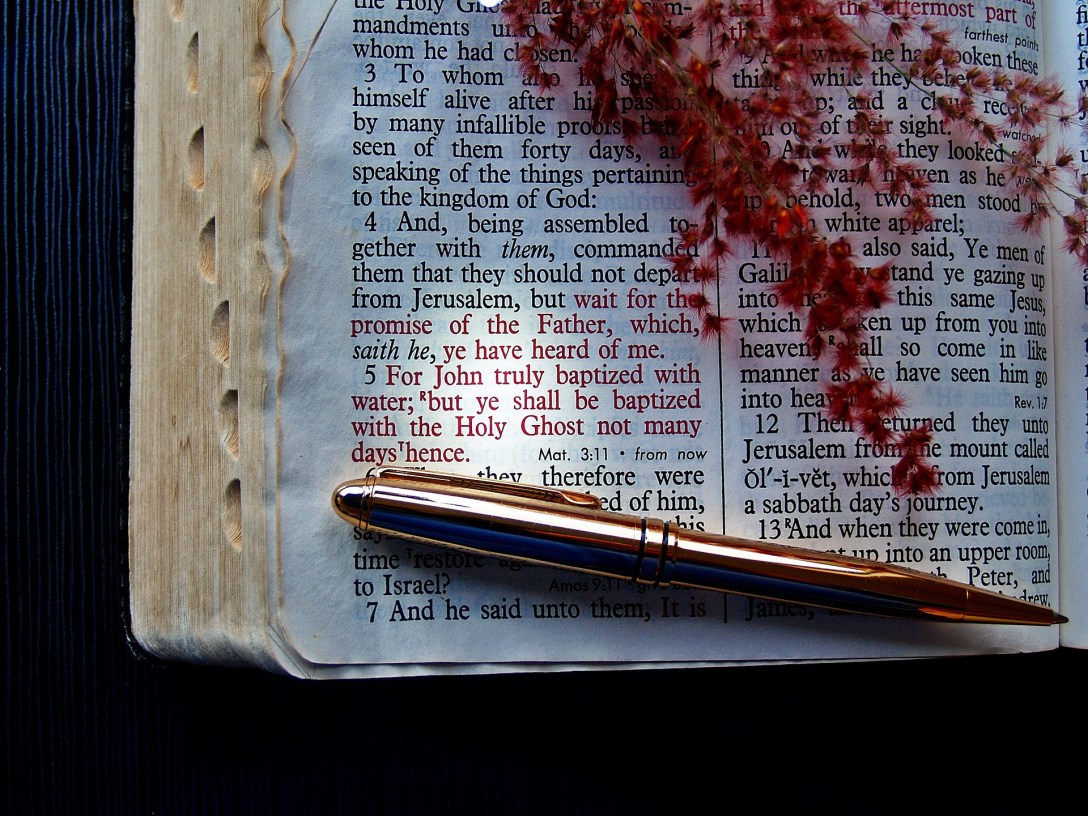
Word of GOD
Father Muhammad, is the Bible the book of GOD, written by his finger, like the Jews say their tablets were written?
No, but that’s alright. Let me explain as I was told:
Divine Inspiration and Authority
The Bible itself claims to be divinely inspired. For example, 2 Timothy 3:16 states, “All Scripture is God-breathed and is useful for instruction, for conviction, for correction, and for training in righteousness”.
This suggests that the words of Scripture are not merely human reflections about God but are communicated by God through human authors. Believers hold that this divine origin grants the Bible supremacy, inerrancy, and infallibility, making it the final authority on faith, morality, and practice
Literal Interpretation vs. Figurative Language
Believing the Bible is the literal Word of God does not require taking every passage in a strictly literal sense. Many passages include metaphor, poetry, allegory, and parables, which convey spiritual truths rather than literal events. For instance, the Hebrew word “yowm” in Genesis can mean a 24-hour day, a period of time, or a general era, allowing for nuanced interpretation of creation accounts. However, core events such as the creation of the universe, the life, death, and resurrection of Jesus, and God’s acts in history are understood as literal and historical.
Unity and Historical Evidence
Despite being written over 1,500 years by more than 40 authors across three continents and in three languages, the Bible maintains remarkable internal unity and consistency in its themes, such as humanity’s sinfulness, God’s plan for redemption, and the coming of the Messiah. Archaeological discoveries, including the Dead Sea Scrolls, Hezekiah’s Tunnel, and inscriptions referencing King David, support the historical reliability of many biblical accounts. This coherence and historical corroboration reinforce the belief that the Bible originates from a single divine source.
Practical Implications
For believers, accepting the Bible as the literal Word of God means cherishing, studying, obeying, and trusting it fully. It serves as a guide for salvation, moral conduct, and understanding God’s nature and will. While interpretation may consider literary forms and context, the Bible’s authority and truth claims remain central to Christian faith.
Practical Implications
For believers, accepting the Bible as the literal Word of God means cherishing, studying, obeying, and trusting it fully. It serves as a guide for salvation, moral conduct, and understanding God’s nature and will.
Summary
In summary, the Bible is considered the literal Word of God in the sense that it is divinely inspired, historically reliable, and spiritually authoritative, even as it employs figurative language to convey deeper truths.
The aircon blows, the dust stirs, and MS Copilot speaks from the silicon.


