

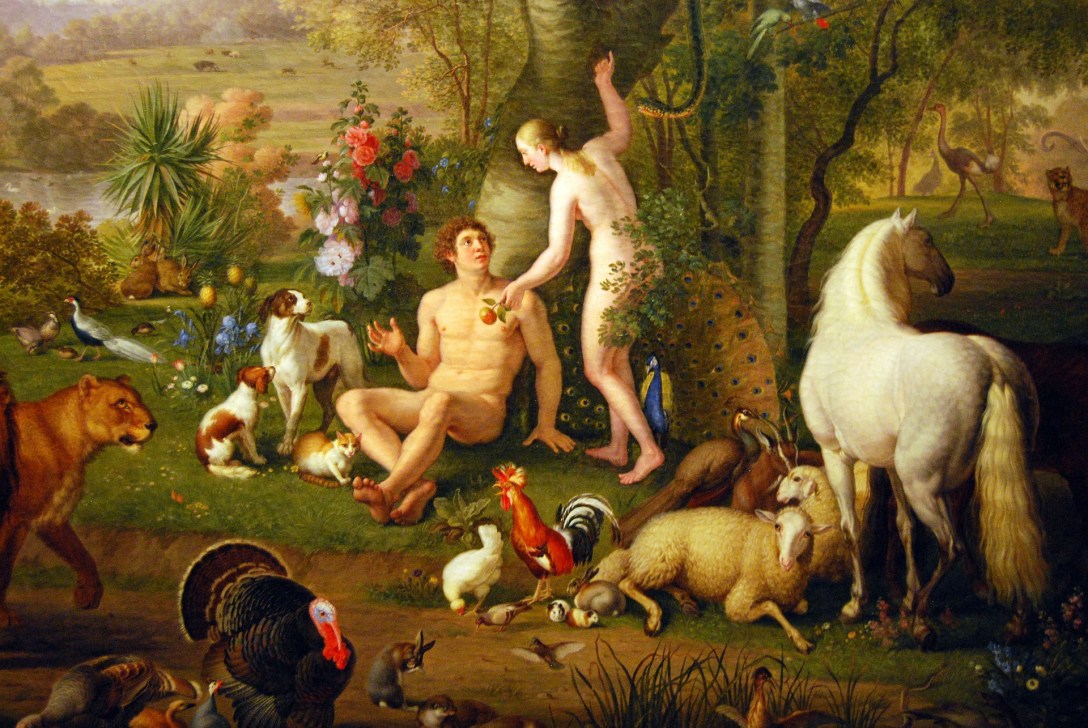
Adam and Eve
Jesus does not mention Adam and Eve by name in the Gospels, nor does He explicitly discuss the Garden of Eden. However, He makes indirect references to them when teaching about marriage.
In Mark 10:6-7, Jesus says, “But from the beginning of creation, God made them male and female. For this cause shall a man leave his father and mother, and cleave to his wife.” Similarly, in Matthew 19:4-5, He quotes Genesis, emphasising that God created humans male and female at the beginning and instituted marriage as a union between one man and one woman. These statements indicate that Jesus viewed the creation of humanity as a foundational event and affirmed the original male-female pairing described in Genesis.
In Luke 3:23-38, Jesus’ genealogy traces His lineage all the way back to Adam, described as “the son of God.” This genealogy presents Adam as a historical figure and the progenitor of all humanity, linking Jesus to all people and highlighting His role as the Redeemer of humanity. By including Adam, Luke emphasises the universality of Jesus’ mission and the historical reality of the first human.
Jesus also alludes to Abel, Adam and Eve’s son, in Luke 11:50-51, connecting the first murder in human history to the broader narrative of sin and redemption. This further reinforces the historical perspective of Adam and Eve and their significance in God’s plan.
In summary, while Jesus does not explicitly narrate the story of Adam and Eve, He affirms their creation, references them in teaching about marriage, and situates humanity’s history within God’s redemptive plan, highlighting both their historical and theological importance.


