
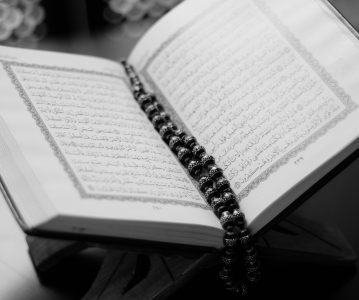
89:1 By the dawn
2 And [by] ten nights (Usually interpreted as the first ten nights of the month of Dhul-Ḥijjah.)
3 And [by] the even [number] and the odd
4 And [by] the night when it passes,
5 Is there [not] in [all] that an oath [sufficient] for one of perception (Based upon the following verses, what has been sworn to by Allah is that He will certainly punish the disbelievers.)?
6 Have you not considered how your Lord dealt with ʿAad – 7 [With] Iram (Another name for the first people of ʿAad, to whom Prophet Hūd was sent.) – who had lofty pillars (Supporting their tents or buildings.), 8 The likes of whom had never been created in the land?
9 And [with] Thamūd, who carved out the rocks in the valley?
10 And [with] Pharaoh, owner of the stakes (By which he tortured people)?
11 [All of] whom oppressed within the lands 12 And increased therein the corruption.
13 So your Lord poured upon them a scourge of punishment.
14 Indeed, your Lord is in observation.
Koran 89:1-14

Muhammad swears by the dawn, or the edge of the shadow of Earth in the Sun’s light, with: “1 By the dawn”. Muhammad swears by what seem like big objects to make himself impressive. A real god has no need to make itself seem impressive; Allah, Muhammad, Islam and the Koran are false.

Muhammad swears by something so obvious, “And [by] ten nights”, that every Qurayshi and Muslim of Muhammad’s time would know, and of course, no one else knows. To find out, let’s check with the scholars of Tafsir Ibn Kathir, 89:1, who state:
Al-Fajr [Dawn] refers to the day of Sacrifice (An-Nahr) in particular, and it is the last of the ten nights…
The “ten nights’ refers to the (first) ten days of Dhul-Hijjah.
Tafsir Ibn Kathir, 89:1
And of course, it’s obvious to all Qurayshi what “Dhul-Hijjah” is, right? But, in case you (and I) don’t know, there’s Wikipedia: Dhul-Hijjah:
the twelfth and final month in the Islamic calendar. It is a very sacred month in the Islamic calendar, one in which the Ḥajj (Pilgrimage) takes place as well as the Festival of the Sacrifice.
Dhul-Hijjah, Wikipedia
So much context, all of which has to be explained, to make clearer the already perfectly clear words of Muhammad and Muhammad pretending to be Allah.

Muhammad swears by the human creations of even and odd: “And [by] the even [number] and the odd” – Does Muhammad not know that these are created by humans?
But, Infidel, the even and odd numbers are created by Allah, like the zero! But they’re not.
Here’s the generating formula for the even numbers:
a(n) = 2n
A005843, The On-line Encyclopedia of Integer Sequences
Here’s the generating formula for the odd numbers:
a(n) = 2*n + 1
A005408, The On-line Encyclopedia of Integer Sequences
The generating formula for the numbers:
a(n) = n.
a(0) = 0, a(n) = a(n-1) + 1
A001477, The On-line Encyclopedia of Integer Sequences

But, Infidel, ZERO! Sure, like Allah is zero without Muhammad, and, well, opinions do differ on zero:
God made the natural numbers; all else is the work of man
Kronecker, Bell 1986, p. 477
So, Zero, is it in the Koran? No. But there are one through twelve, used in non-mathematical contexts. So surely Zero should be in the Koran to claim it’s from Islam, right? Otherwise, it’s innovation, right? A great sin in Islam.
But, Infidel, NONE is ZERO! OK, I’ll give you that there’s NONE in the Koran, just like there’s NOTHING of substance and lots of NONSENSE, plus what seems like an infinity of LIES.
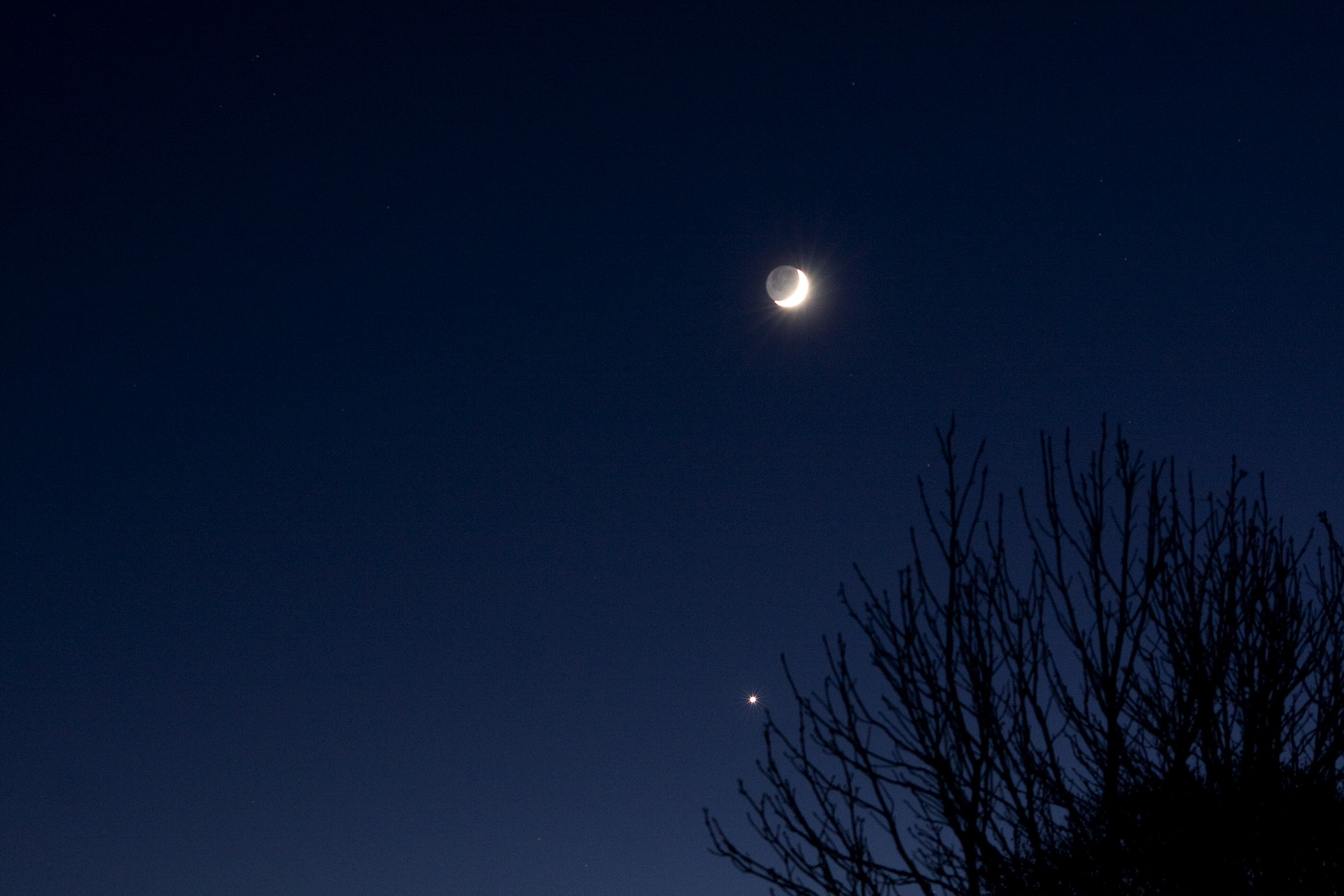
Muhammad continues to swear by shadows: “And [by] the night when it passes”, and follows that up with, boasting?! with: “5 Is there [not] in [all] that an oath [sufficient] for one of perception?” For such boasting, look at how the translators had to help Muhammad out.

Muhammad then name-drops verses 6-9, which refer to the stories of Hud and Saleh. Interestingly, Muhammad refers to Iram of the Pillars here, but I suspect Muhammad actually refers to the story of Shuaib. Why? I think “pillars” were meant to be “trees”. But that’s just my opinion, as Iram is mentioned only once here with Hud and Saleh, and it’s most often that Shuaib, Hud, and Saleh are mentioned together in the Koran.
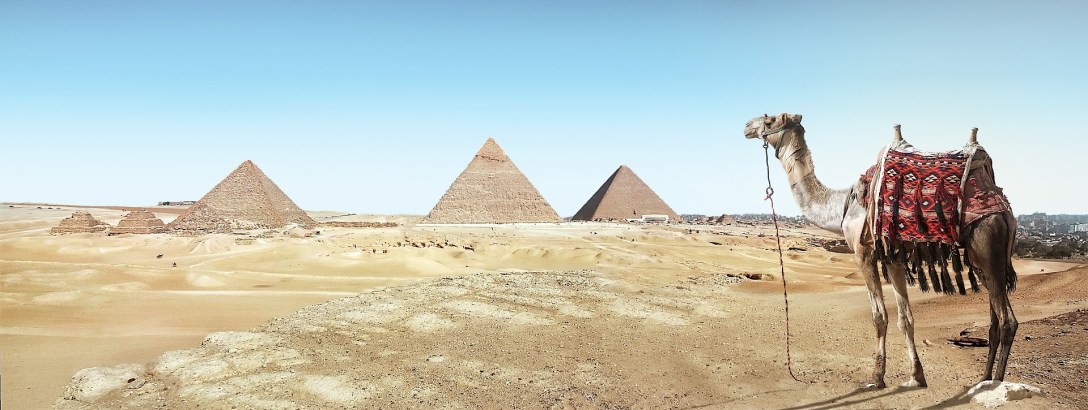
Muhammad is ignorant: “And [with] Pharaoh, owner of the stakes?” What are the “stakes”? These:

But, Infidel, there are no tent stakes or pegs in the picture! Look harder.
But, Infidel, the army of Pharaoh was drowned in the sea by Allah and isn’t in the picture! That’s the excuse the scholars in Tafsir Ibn Kathir, 89:1, give:
Al-Awtad are the armies who enforced his commands for him [Pharaoh].
[Pharaoh] used to nail their hands and their feet into pegs (Awtad) of iron that he would hang them from [crucifixion – an anachronism].
He used to nail the people (up) on pegs. [Impalement?]
Tafsir Ibn Kathir, 89:1
But, let’s get back to the “stakes” – what are they? I’ll make it more obvious:

Muhammad literally had no word for pyramids, the tombs of Pharaohs in Egypt. This alone shows that the Koran is false, that Allah is imaginary, Islam is false, and Muhammad is a false prophet.
But, Infidel, you LIE! But I don’t. See:
78:6 Have We not made the earth a resting place? 7 And the mountains as stakes?
Koran 78:6-7
Pharaoh’s pyramids, which resemble mountains, are like angled tent stakes or pegs by Muhammad, imagining Allah placing mountains on top of the earth like a Bedouin would place tent pegs or stakes, like this modern example:

Muhammad would have seen something similar when pitching tents at night on his caravan trip.

Thus, Muhammad gets Pharaoh to own the stakes, the pyramids, and not his army, which was free, not slaves.
Once you know this, you then know that the translators made a mistake with verses 10-12:
10 And [with] Pharaoh, owner of the stakes? – 11 [All of] whom oppressed within the lands 12 And increased therein the corruption.
Koran 89:10-12
After removing the translator additions, changing “stakes” to “pyramids” and changing “whom” to “who”, here’s what Muhammad really meant, in English:
10 And Pharaoh, owner of the pyramids, 11 who oppressed within the lands 12 And increased therein the corruption.
Corrected Koran 89:10-12
Muhammad continues his habit of lying with: “13 So your Lord poured upon them a scourge of punishment.”
But, infidel, you’re lying! No one knows of the stories of Hud, Saleh or Shuaib, but through Muhammad in his recitation, his Koran. How do we confirm Muhammad’s stories?
And let’s remember that Ancient Egypt was not destroyed:

But, Infidel, the plagues are in the Bible! I know, they still didn’t destroy Egypt. What destroyed Egypt was the Muslim invasion and conquest, which happened after Muhammad’s nonsense in his Koran.
Muhammad continues to issue vague threats: “14 Indeed, your Lord is in observation”, which never came to pass.
The best replacement for this passage is: “”, the empty sentence.

 Koran Contradiction
[…] Qur’an 89:1-14 […]
LikeLike