
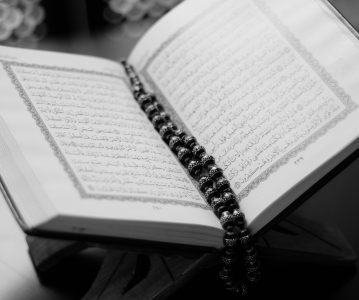

Muḥammad is the Messenger of Allah; and those with him are forceful against the disbelievers, merciful among themselves.
You see them bowing and prostrating [in prayer], seeking bounty from Allah and [His] pleasure.
Their sign is in their faces from the effect of prostration [i.e., prayer]. That is their description in the Torah.
And their description in the Gospel is as a plant which produces its offshoots and strengthens them so they grow firm and stand upon their stalks, delighting the sowers – so that He [i.e., Allah] may enrage by them the disbelievers.
Allah has promised those who believe and do righteous deeds among them forgiveness and a great reward.
Koran 48:29
All of this is from Muhammad’s point of view. He’s describing what he sees: his Muslim bandits, full of anger, ready to kill innocent people to steal their possessions and force Islam upon the survivors who don’t resist.
Notice the “bounty” – Muhammad lies and says it comes from “Allah”, his idol, but you know from the previous passages that “bounty” comes from hard-working innocent people, who are murdered or enslaved by Muhammad and his Muslim bandits.
None of these descriptions come from Torah or the “Gospel”, the Bible. Muhammad was merely lying as usual.
The “sign is in their faces from the effect of prostration” could refer to what’s called a “prayer bump“, but I think it’s merely that Muhammad’s men are literally prostrating to Muhammad in front of him. Prayer bump or prostration to a man is never in Torah or the Bible, Judaism or Christianity.
The plant comparison is obviously from Muhammad’s point of view, his Muslims all in lines, bowing, prostrating and scraping to him (like wheat in the wind), and being enraged by Muhammad’s earlier speeches, full of hate against innocent people with: “so that He [i.e., Allah] may enrage by them the disbelievers”. This is confirmed by the earlier sentence: “You see them bowing and prostrating [in prayer], seeking bounty from Allah and [His] pleasure.”

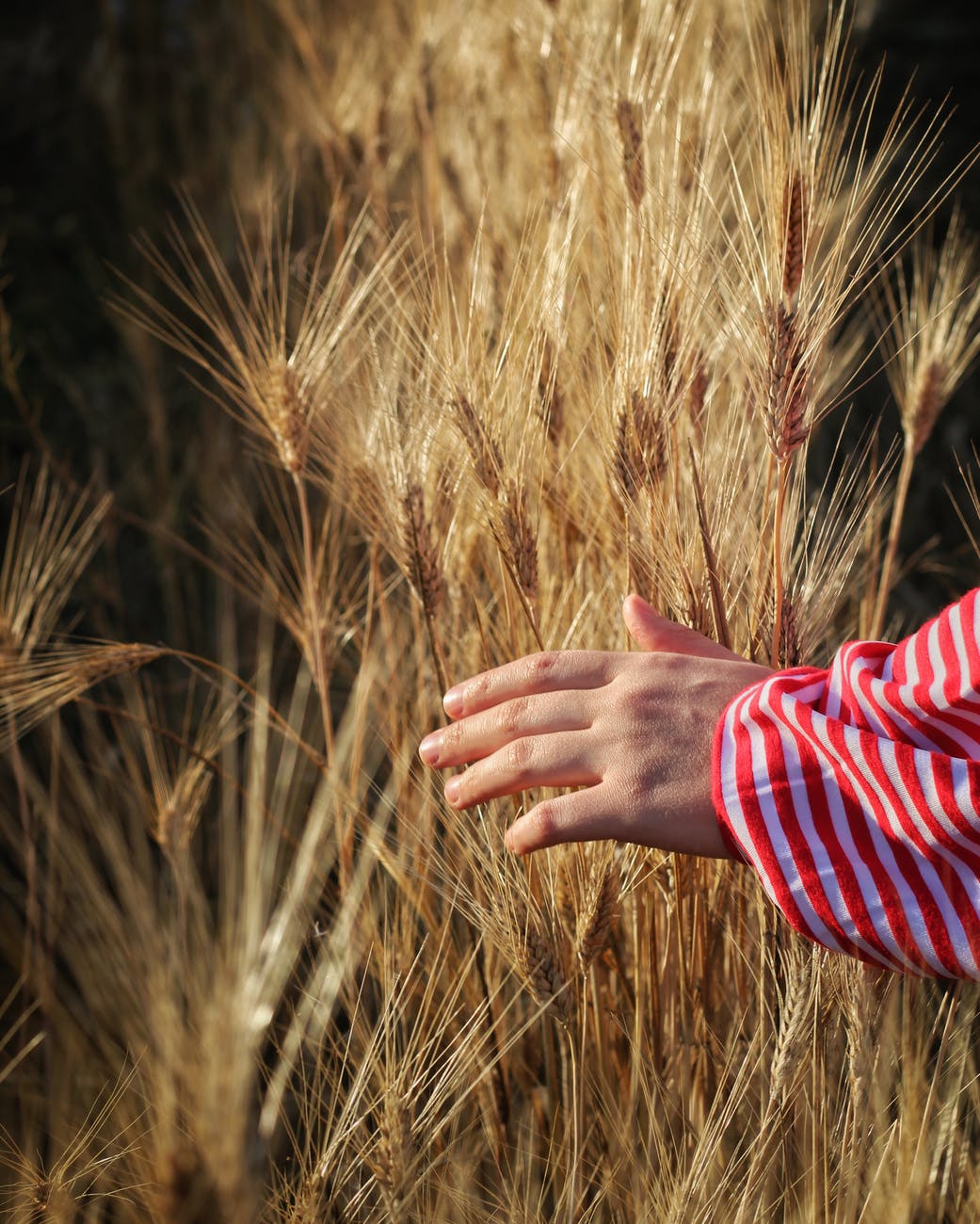


Muhammad adds the carrot of imaginary Islamic Paradise for his Muslim bandits, as a reward for their evil behaviour; thus you know Islam is evil and false.
All of this passage is locked to Muhammad’s time and place; he’s exulting in pleasure at seeing his Muslims bowing, prostrating and worshipping him.
The best replacement for this passage is: “”, the empty sentence.
MS Copilot explanation of where Muhammad is getting this comparison from:
Qur’an 48:29 is almost certainly drawing on the same agricultural metaphor tradition found in the Bible, but not from a single specific parable. It’s part of a shared Near Eastern literary vocabulary about plants symbolising righteous communities, and the Qur’an adapts it for Muhammad’s followers.
Qur’an 48:29 uses a plant-growth metaphor that strongly resembles Biblical imagery
The Gospel description in 48:29 says the believers are:
- a seed
- that sends forth its shoot
- then strengthens it
- then becomes thick
- then stands upon its stalk
- delighting the sowers
This is very close to Biblical agricultural metaphors, especially those used to describe:
- the growth of the righteous,
- the spread of the faithful,
- the strengthening of a community,
- the vindication of God’s people in the sight of enemies.
This is a standard Biblical trope.
But which Biblical text is closest?
It’s not actually the Parable of the Wheat and Tares (Matthew 13:24–30). That parable is about good and evil growing together until judgment — not about the righteous community strengthening and delighting the sower.
The Qur’anic imagery aligns more closely with:
1. Psalm 92:12–14
The righteous flourish like the palm tree… They still bear fruit in old age; they are ever full of sap and green.
This is about righteous people growing strong, upright, and fruitful — very similar to the Qur’anic “standing upon its stalk, delighting the sowers.”
2. Isaiah 61:11
As the earth brings forth its sprouts… so the Lord will cause righteousness and praise to sprout up before all nations.
This is collective growth, visible to outsiders — again matching Qur’an 48:29’s “delighting the sowers” and “enraging the disbelievers.”
3. Mark 4:26–29 (Parable of the Growing Seed)
The seed sprouts and grows… first the blade, then the ear, then the full grain in the ear.
This is the closest structural parallel:
- shoot → strengthened → thick → standing
- blade → ear → full grain
Both describe stages of growth, culminating in strength and maturity.
Why the Qur’an uses this imagery
The Qur’an claims this description is found in the Injeel (Gospel). That doesn’t necessarily mean a verbatim quotation; Qur’anic references to earlier scriptures often point to themes, motifs, or general prophetic descriptions, not specific verses.
The plant metaphor in 48:29 serves several purposes:
1. Legitimising Muhammad’s community
By saying “this is their description in the Gospel,” the Qur’an asserts continuity with earlier revelation.
2. Portraying the early Muslim community as divinely nurtured
The believers grow:
- organically
- steadily
- visibly
- with divine support
This mirrors Biblical depictions of God cultivating His people.
3. Explaining why the community’s success angers opponents
The verse explicitly says the flourishing plant “enrages the disbelievers.”
This is a rhetorical flourish also found in Biblical prophetic literature, where the prosperity of the righteous frustrates their enemies.
So is Muhammad copying the Bible?
The more historically grounded answer is: He is drawing on a shared Jewish–Christian–Near Eastern metaphor tradition, not copying a single parable.
Agricultural metaphors were:
- ubiquitous in Biblical texts
- common in Second Temple Jewish preaching
- used in Syriac Christian homilies
- familiar in Arabian Christian communities
The Qur’an’s version is distinctive because:
- it applies the metaphor not to the Kingdom of God,
- but to Muhammad’s followers themselves.
That shift is significant: the Qur’an repurposes a Biblical image to legitimise the early Muslim community.
Final synthesis
Qur’an 48:29’s plant metaphor is clearly rooted in Biblical imagery, especially the “growing seed” tradition found in Psalms, Isaiah, and Mark.
But it is not a direct borrowing of the wheat parable in the Bible.
It is a reframed, repurposed Near Eastern agricultural metaphor used to portray Muhammad’s followers as a divinely cultivated community whose flourishing vindicates their faith and irritates their opponents.
Conclusion
Muhammad was a false prophet, for a false god, Allah, for a false religion, Islam, without even a false book, the Koran.


[…] Qur’an 48:29 […]
LikeLike