
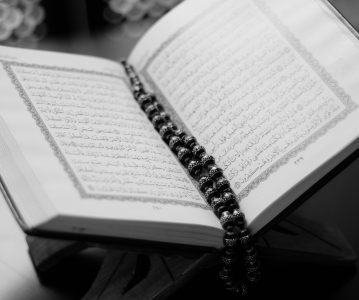
19:77 Then, have you seen he who disbelieved in Our verses and said, “I will surely be given wealth and children [in the next life]?”
78 Has he looked into the unseen, or has he taken from the Most Merciful a promise?
79 No! We will record what he says and extend for him from the punishment extensively.
80 And We will inherit him [in] what he mentions, and he will come to Us alone.
Koran 19:77-80
Muhammad commits shirk with “We”, “Us” or “Our”, placing Allah as a companion to himself, showing that Allah is incoherent, imaginary, and fictional. So Islam is incoherent with monotheism; thus, Islam is contradictory and false.
Muhammad, in his Koran, addresses a sentence, verse, or passage to “Anonymous They”, with “they”, “them”, “he”, “your”, “the people”, and so on, without naming them. For more, read Anonymous They.
Note the mistake of the translators to add in “[in the next life]”. The Quraysh didn’t believe in an afterlife. For more, see Quraysh Polytheism. Even if the verse is addressed to a Muslim man, obviously in Paradise, Muslim men won’t have children, and the wealth of Paradise is nonsense, decorations that can’t be spent, let alone the gold coins that Allah can’t create.
Note Muhammad’s rhetorical question, which exposes Muhammad’s inability to look into “the unseen” and who hasn’t ever been given a promise from Allah (the “Most Merciful”).
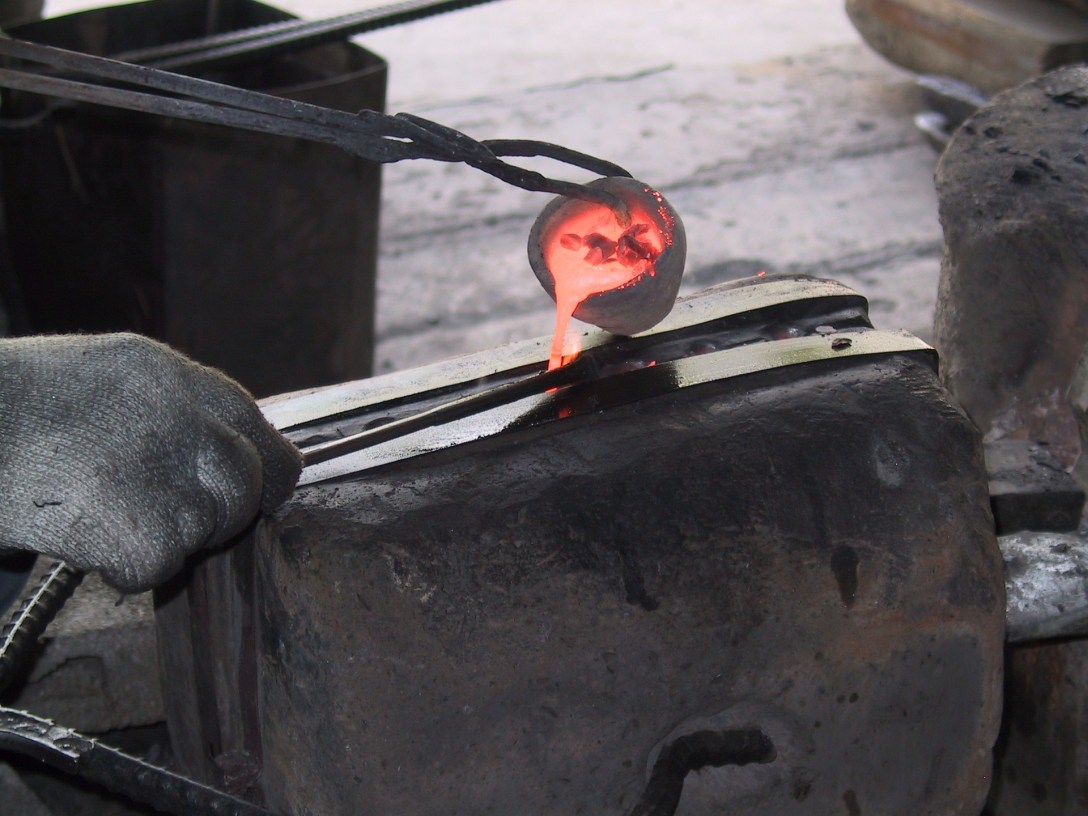
Worse, this passage is in response to a dispute between a Muslim blacksmith and a Quraysh man. Here’s the story from Tafsir Ibn Kathir, 19:77:
Khabbab bin Al-Aratt said, “I was a blacksmith and [Quraysh man] owed me a debt. So I went to him to collect my debt from him.”
He said to me, “No, by Allah, I will not pay my debt to you until you disbelieve in Muhammad.”
I replied to him, “No, by Allah, I will not disbelieve in Muhammad until you die and are resurrected again.”
He then said to me, “Verily, if I die and am resurrected, and you come to me, I will also have abundance of wealth and children and I will repay you then.”
Tafsir Ibn Kathir, 19:77
Notice that both the Muslim blacksmith and the Quraysh man believed in Allah, and the Muslim blacksmith also believed in Muhammad and his nonsense of Islam. Note that the Quraysh man correctly points out that in the Islamic bodily resurrection, he will have lots of wealth as he would have heard of the lies of Muhammad, and was already a believer in Allah. The Quraysh man is showing that if Muhammad was true, then there’s no need to pay debts here in this world. The Muslim blacksmith and Muhammad hadn’t thought this through with the belief in an afterlife filled with treasures, that could easily fulfil debts in the past.
Notice how Muhammad changes to “We” with his description of the punishment of the Quraysh man. This is the “evil” or Demon, promising vain threats, which will never come true. Consider, that the Islamic end times have already happened with the moon splitting or eclipse, and 1400 years have passed with Muhammad, the Muslim blacksmith and the Quraysh man all long dead, they’re dust in the desert. Muhammad’s promised punishment has never come true.
Worse, Muhammad is unable to tell the Quraysh man this threat which exposes that Allah, Islam, and the Koran are all local to Muhammad, showing that all are false.
The best replacement for this passage is: “”, the empty sentence.


[…] Qur’an 19:77-80 […]
LikeLike