
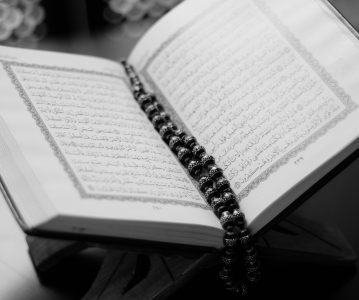
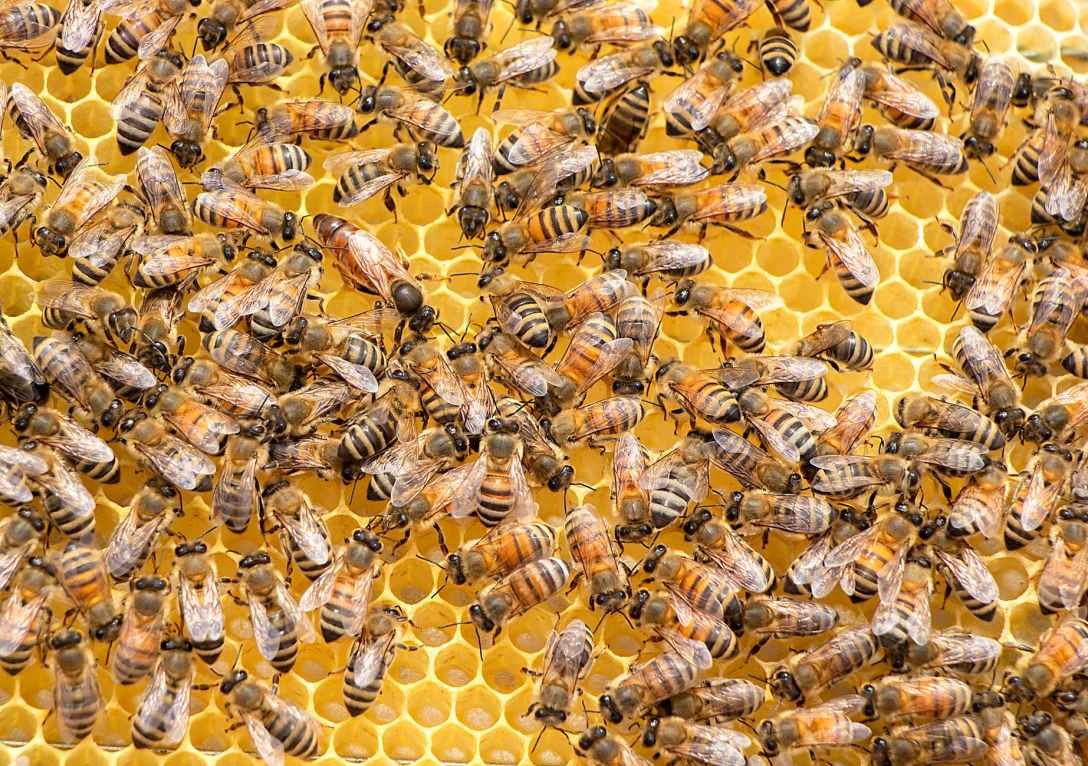
16:68 And your Lord inspired to the bee, “Take for yourself among the mountains, houses, and among the trees and [in] that which they construct. 69 Then eat from all the fruits and follow the ways of your Lord laid down [for you].”
There emerges from their bellies a drink, varying in colors, in which there is healing for people.
Indeed in that is a sign for a people who give thought.
Koran 16:68-69
We domesticated the Bee in ancient Egypt thousands of years before imaginary Allah told “the” bee to live in the “construct”, or bee hives, of “they”, the Quraysh.

The inscription says that the governor reigned for 13 years and during his reign erected the city of Gabarri-ibni, while also re-establishing the canals and encouraging the planting of date palms in different cities, and working on the development of agriculture in the city of Suhi. Symbols above the gods are the pointed spade of Marduk, patron of Babylon, next to the stylus of Nabu, and the winged disc of Shamash, the sun god, next to the lunar disc of Sin. Note especially the crescent moon symbol, inherited into Allah in Islam.
I am Shamash-resh-ușur, the governor of Suhu and the land of Mari. Bees that collect honey, which none of my ancestors had ever seen or brought into the land of Suhu, I brought down from the mountain of the men of Habha, and made them settle in the orchards of the town ‘Gabbari-built-it’. They collect honey and wax, and I know how to melt the honey and wax – and the gardeners know too. Whoever comes in the future, may he ask the old men of the town, (who will say) thus: “They are the buildings of Shamash-resh-ușur, the governor of Suhu, who introduced honey bees into the land of Suhu.”
translated text from stele, (Dalley, 2002)
Muhammad shows his lack of observation with: “eat from all the fruits”. Bees do not eat fruit. They sip nectar from flowers. It’s wasps that eat fruit. Bees will eat fruit and sweet substances when they can’t find nectar.
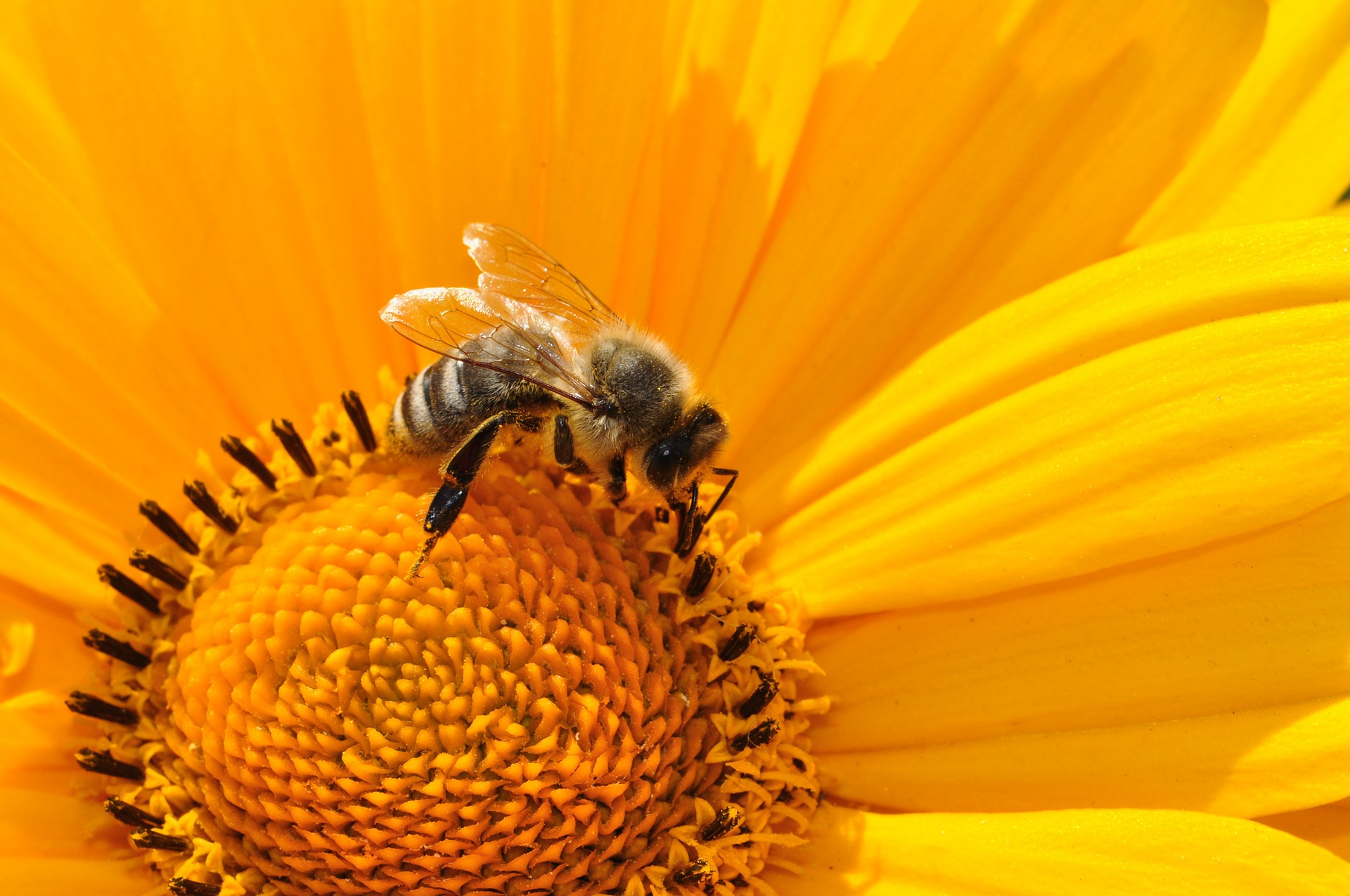
Obviously, bees drinking nectar is incoherent with bees being told to “eat from all the fruits”. Bees do NOT “follow the ways of your Lord laid down [for you].”

Obviously, wasps eating fruit is incoherent with bees being told to “eat from all the fruits”. Obviously, bees (and wasps) do NOT “follow the ways of your Lord laid down [for you].”
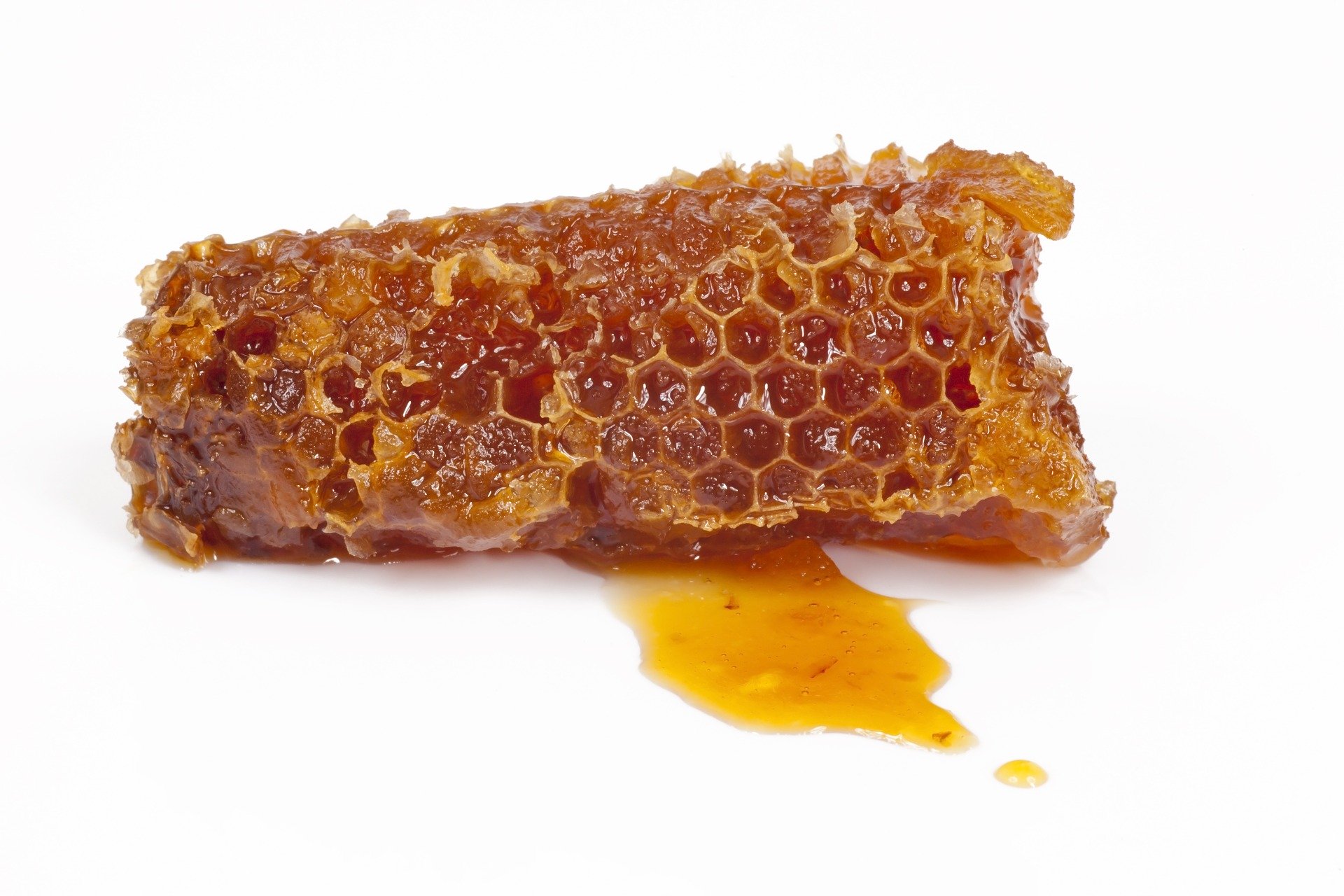
Muhammad lied: “There emerges from their bellies a drink”. Honey doesn’t come from the bellies of bees. We do not milk bees. Honey comes from the cells in the hives, from the honeycomb, as shown above, honey drips from a broken piece of honeycomb.
In the above video, see how the man cuts off the wax cap of the honeycomb cells releasing honey NOT from bees but from the honeycomb.
The above video shows how we harvest honey from a bee hive, Muhammad’s “construct”.
Muhammad lied: “in which there is healing for people.” No, there’s no healing from “drinking” or eating the honey. Muhammad also later forbade the drinking of alcohol, and that includes honey mead. Muhammad is instead referring to drinking honey mead. Honey (and alcohol) can be used as wound dressing, etc. For example: “Evidence for Clinical Use of Honey in Wound Healing as an Anti-bacterial, Anti-inflammatory Anti-oxidant and Anti-viral Agent: A Review”
Traditionally, honey has been used to treat burns, infected and non-healing wounds and ulcers, boils, pilonidal sinus, venous and diabetic foot ulcers. Recent studies confirm the efficacy of honey in treating venous ulcers. In patients suffering from malignant wounds, improvement with respect to wound size and cleanliness was seen after treatment with honey-coated bandages. Similarly, honey dressing quickened rates of healing in pressure wounds. Honey has also been used to lessen foul odors emanating from wounds which cause a social barrier for patients and may lead to isolation. There are also reports of using medihoney to reduce the symptoms of chronic ocular surface diseases. Unrefined honey has anti-inflammatory, anti-bacterial and anti-oxidant properties. The antibacterial action is due to its acidity, hydrogen peroxide content, osmotic effects, nutritional and antioxidant content, stimulation of immunity, and unidentified compounds.
Muhammad’s ignorance of this application of honey to wounds obviously condemned his Muslim men to suffer and die from infected wounds. This NZ company takes advantage of our knowledge and produces these “medihoney” dressings and creams for ordinary people to help assist wound healing:

Muhammad claims: “Indeed in that is a sign for a people who give thought.” And when we investigate this, we find that Muhammad is ignorant of even traditional uses of honey, let alone the modern benefits of honey, and Muhammad is ignorant of bees, thinking they’re like wasps. Possibly with his poor eyesight, he thought wasps were bees. Or he was just stupid.
The best replacement for this passage is: “”, the empty sentence.

 Koran Contradiction
[…] Qur’an 16:68-69 […]
LikeLike