
16:26 Those before them had already plotted, but Allah came at their building from the foundations, so the roof fell upon them from above them, and the punishment came to them from where they did not perceive.
27 Then on the Day of Resurrection He will disgrace them and say, “Where are My ‘partners’ for whom you used to oppose [the believers]?”
Those who were given knowledge will say, “Indeed disgrace, this Day, and evil are upon the disbelievers” –
Koran 16:26-27
Note the “-” at the end. There’s something missing here. Or perhaps it’s meant to run on into the next verse?
Or it could simply be a translation issue that Allah in his pride hasn’t yet noticed and fixed. Either way, this shows an imperfection that shouldn’t be here, thus showing the Koran is imperfect, and thus not the words of Allah, thus Allah is imaginary, fictional, and false.
Muhammad, in his Koran, addresses a sentence, verse, or passage to “Anonymous They”, with “they”, “them”, “he”, “your”, “the people”, and so on, without naming them. For more, read Anonymous They.
Muhammad spoke about Allah in the third person. This means this passage is not the perfect words of the perfect Qur’an from perfect Allah. Thus, Allah is false, imaginary, and fictional, which means Islamic doctrine and Islam are nonsensical and false.
So who are those who “plotted” and whose building came to ruin? According to Tafsir Ibn Kathir, 16:26, there are three opinions:
This refers to Namrud (Nimrod), who built the tower.
Others said that it refers to Bukhtanassar (Nebuchadnezzar).
The correct view is that this is said by way of example, to refute what was done by those who disbelieved in Allah and associated others in worship with Him.
Tafsir Ibn Kathir, 16:26
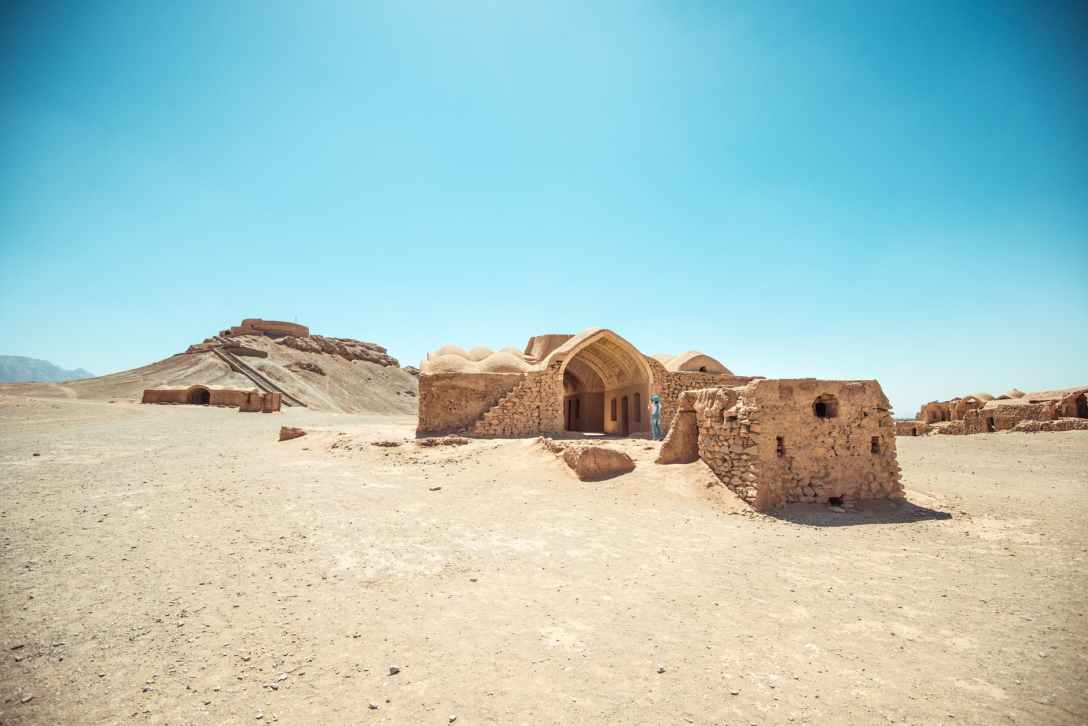
So two specific opinions and one general from the scholars. I’m of a third specific opinion myself, that it refers to the collapse of the Kaaba in “Mecca”, Petra, Jordan, and these ruins can be seen even today:

But, Infidel, how can you know this?! I don’t know for sure, but see that the building is collapsed, it’s where the idols of the Kaaba were, and it’s about the Quraysh, who lived in Petra, Jordan, the tribe of Muhammad. Muhammad knew the Quraysh were plotting against him: “Those before them had already plotted”. The earthquake is described as “Allah came at their building from the foundations” and “so the roof fell upon them from above them”. This is why Muhammad is ranting in triumph here, talking for Allah with “the punishment came to them from where they did not perceive.” and as Allah with: “Where are My ‘partners’ for whom you used to oppose [the believers]?” and then as himself with: “Indeed disgrace, this Day, and evil are upon the disbelievers”. The “this day” refers to the actual day Muhammad heard the news of the collapse or perhaps even witnessed it himself.
So this passage is essentially Muhammad mythologising history, converting what happened into after-the-fact “revelation” from imaginary Allah, and getting it wrong with “this Day”.
The best replacement for this passage is: “”, the empty sentence.
But, Infidel, it’s about Nimrod and his tower! So why not repeat the story of Nimrod and his tower correctly then?
Now the whole world had one language and a common speech. 2 As people moved eastward, they found a plain in Shinar and settled there.
3 They said to each other, “Come, let’s make bricks and bake them thoroughly.” They used brick instead of stone, and tar for mortar. 4 Then they said, “Come, let us build ourselves a city, with a tower that reaches to the heavens, so that we may make a name for ourselves; otherwise we will be scattered over the face of the whole earth.”
5 But the Lord came down to see the city and the tower the people were building. 6 The Lord said, “If as one people speaking the same language they have begun to do this, then nothing they plan to do will be impossible for them. 7 Come, let us go down and confuse their language so they will not understand each other.”
8 So the Lord scattered them from there over all the earth, and they stopped building the city. 9 That is why it was called Babel—because there the Lord confused the language of the whole world. From there the Lord scattered them over the face of the whole earth.
NIV Genesis 11:1-9
Or refer to Muhammad’s two corrupted stories here?
And Pharaoh said, “O eminent ones, I have not known you to have a god other than me. Then ignite for me, O Haman, [a fire] upon the clay and make for me a tower that I may look at the God of Moses. And indeed, I do think he is among the liars.”
Koran 28:38
40:36 And Pharaoh said, “O Haman, construct for me a tower that I might reach the ways – 37 The ways into the heavens – so that I may look at the deity of Moses; but indeed, I think he is a liar.”
And thus was made attractive to Pharaoh the evil of his deed, and he was averted from the [right] way. And the plan of Pharaoh was not except in ruin.
Koran 40:36-37
But, Infidel, it’s Nebuchadnezzar! Nebuchadnezzar I or Nebuchadnezzar II? One of them attacked nations, not a building. And none of their buildings collapsed on them.
So the best replacement for this passage is: “”, the empty sentence.

 Koran Contradiction
[…] Qur’an 16:26-27 […]
LikeLike