

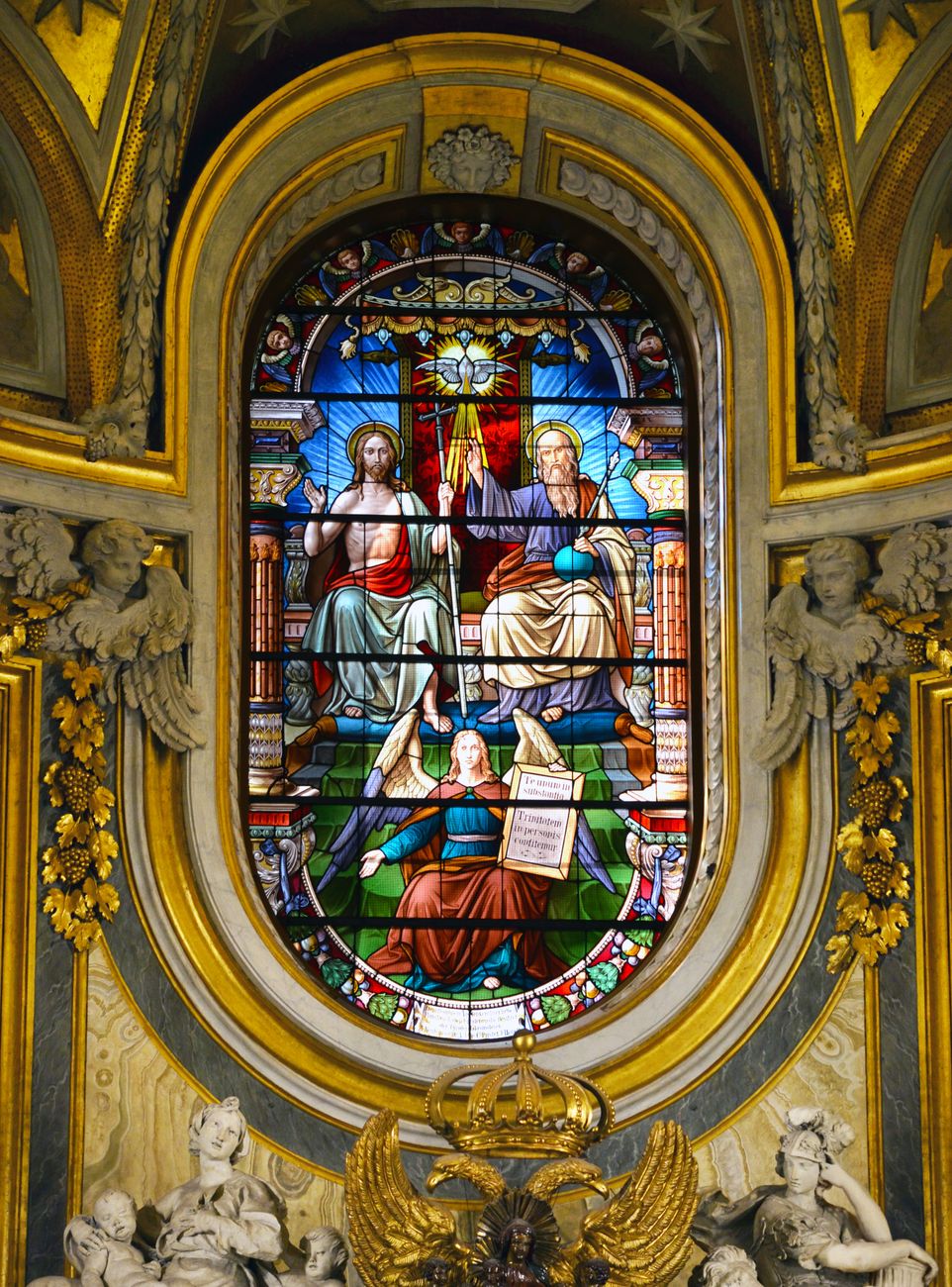
The Trinity is the Christian belief that one God exists eternally as three distinct Persons – Father, Son, and Holy Spirit – sharing the same divine essence.
Definition and Core Beliefs
The Trinity, or Triune God, teaches that God is one in essence but three in person: the Father, the Son (Jesus Christ), and the Holy Spirit. Each Person is fully God, co-equal and co-eternal, yet there is only one God, not three separate gods. This doctrine expresses both the unity and distinction within the Godhead, affirming that the three Persons are distinct in their relations and roles but inseparable in their divine nature and action (Philippians 1:2; Titus 2:13; Acts 5:3–4).
Biblical Foundations
While the term “Trinity” does not appear in the Bible, the concept is rooted in Scripture. The New Testament contains triadic formulas, such as the Great Commission: “Baptizing them in the name of the Father and of the Son and of the Holy Spirit” (Matthew 28:19), and the apostolic benediction: “The grace of the Lord Jesus Christ, the love of God, and the communion of the Holy Spirit be with you all” (2 Corinthians 13:13). The Old Testament has also been interpreted to hint at a plurality within God, for example, in Genesis 1:26: “Let us make man in our image”.
Historical Development
The doctrine was formulated by early Church Fathers in response to theological debates about the nature of God and Christ. Tertullian, a Latin theologian of the early 3rd century, coined the term “Trinity.” Councils such as the Fourth Lateran Council clarified that the Father begets, the Son is begotten, and the Holy Spirit proceeds, emphasising the distinct roles of each Person while maintaining one divine essence.
Roles of the Three Persons
- God the Father: Creator, sustainer, and source of all things.
- God the Son (Jesus Christ): Redeemer, fully God and fully human, whose life, death, and resurrection reconcile humanity to God.
- God the Holy Spirit: Comforter, guide, and enabler of spiritual life, working within believers to illuminate Scripture and empower obedience.
Common Misconceptions
The Trinity is often misunderstood. Christians do not believe in three gods (tritheism), nor that God merely appears in three forms (modalism), nor that God is divided into parts. Instead, the Trinity affirms one God in three distinct Persons, each fully divine and co-eternal.
Theological Significance
Understanding the Trinity is essential for grasping how God interacts with the world: creation comes from the Father, redemption through the Son, and sanctification by the Holy Spirit. It shapes Christian worship, prayer, and the understanding of God’s personal and relational nature.
Summary from AI.

