

Why God is the Christian God.
One of the things as to what we can ask when questioning which religion is true, if any at all, is what historical basis is there for the facts that occurred to show that God had intervened and shown himself in history, that has to be consistent what we know about what God must be philosophically. What many New Testament historians have done, and this is extremely interesting is that they’ve identified the historical events that surround the life and death of Jesus, and they found these to be bedrock facts, that virtually every scholar working in the field, whether it be an atheist historian to a Jewish historian, is that they all agree to a series of bedrock historical facts. The facts are many, but here are 5:
- Jesus died by crucifixion;
- after Jesus’ death, his disciples experienced post-mortem experiences of Jesus after his death;
- Paul, a persecutor of the early Church converted to Christianity, after experiencing the post-mortem appearances of Jesus;
- James converted towards Christianity, after a having a post-mortem experience of Jesus;
- the tomb that Jesus laid was empty.
And from these 5 historical bedrock facts, they tried to reconstruct what had historically taken place. And they found that all naturalistic theories from hallucinations, apparent death to fraud theories all fail because they contradict one or more of the facts and thus fail to provide any explanatory power. And only the hypothesis that Jesus resurrected from the dead can possibly explain all those 5 facts without doing damage to any of them, and while still meeting what it means to be a good historical hypothesis. Thus, in conclusion, the best explanation of the historical facts is that Jesus rose from the dead, and thus counts as strong evidence that the Christian God is real because he intervened, and demonstrably so, in history, by raising Jesus from the dead.
In fact, this is such a good hypothesis, that a secular channel with 10 million subscribers has recently made a video on it because it’s just that well respected as a historical hypothesis. It’s very well made, well reasoned to, and completely unbiased, as it shows both sides of the argument, as well as presenting the historical evidence for the event of the Resurrection.
I recommend watching this video:
While a full analysis of all relevant evidence and objections is beyond the scope of this paper, these facts are most certainly as well established as anything historical can be, which is an extremely uncontroversial thing to say given 99% of New Testament historians of all stripes agree to these. Let us examine some of the mountains of evidence for the Resurrection and a brief mention of some rebuttal to some of the objections raised throughout the ages.
1: Jesus died by crucifixion
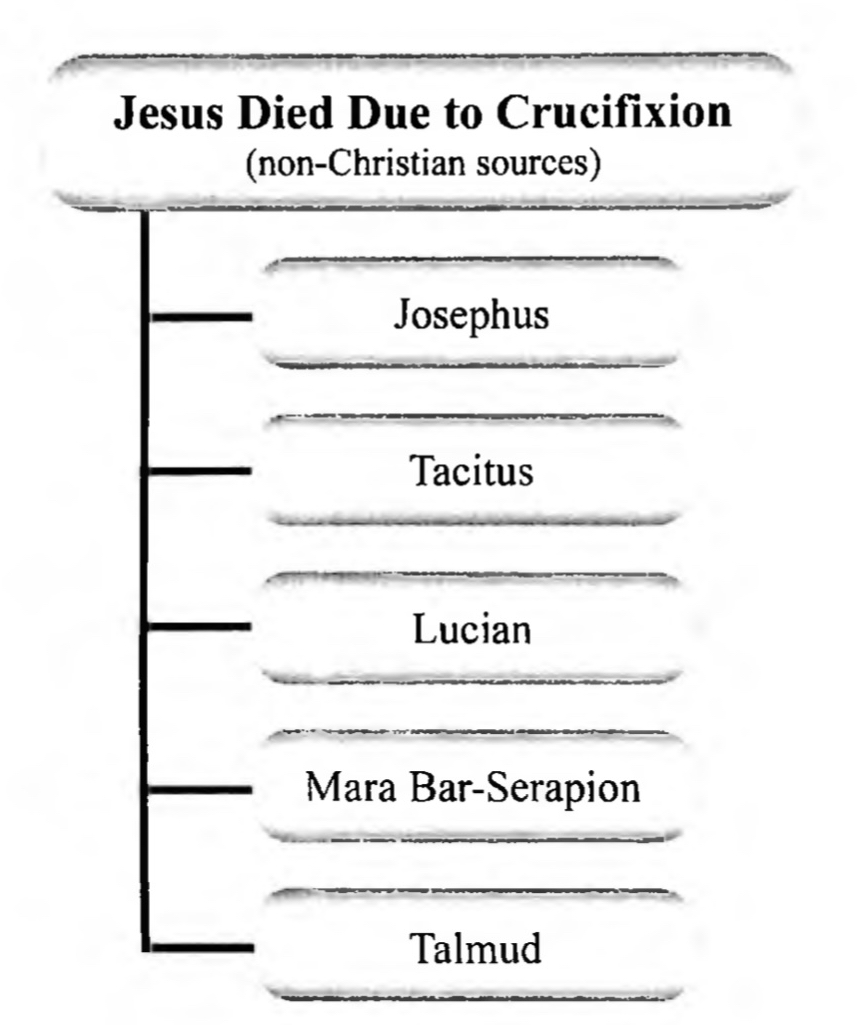
That Jesus was executed by crucifixion is recorded in all four gospels. However, a number of non-Christian sources of the period report the event as well.
Josephus writes, “When Pilate, upon hearing him accused by men of the highest standing amongst us, had condemned him to be crucified…”.
Tacitus reports, “Nero fastened the guilt [of the burning of Rome] and inflicted the most exquisite tortures on a class hated for their abominations, called Christians by the populace. Christus, from whom the name had its origin, suffered the extreme penalty during the reign of Tiberius at the hands of one of our procurators, Pontius Pilatus.”
Lucian of Samosata, the Greek satirist, writes, “The Christians, you know, worship a man to this day—the distinguished personage who introduced their novel rites, and was crucified on that account.”!
Mara Bar-Serapion, writing to his son from prison comments, “Or [what advantage came to] the Jews by the murder of their Wise King, seeing that from that very time their kingdom was driven away from them?” Although Mara does not mention crucifixion as the mode of Jesus’ execution, he does say that he was killed.
The Talmud reports that “on the eve of the Passover Yeshu was hanged.” Yeshu is Joshua in Hebrew. The equivalent in Greek is lesous or Jesus. Being hung on a tree was used to describe crucifixion in antiquity. Clearly, Jesus’ death by crucifixion is a historical fact supported by considerable evidence, possessing 5 extrabiblical independent sources for the event.
The highly critical atheist scholar of the Jesus Seminar, John Dominic Crossan, writes, “That he was crucified is as sure as anything historical can ever be.”
2: Jesus disciples believed and claimed he rose and appeared to them (post-mortem experiences)
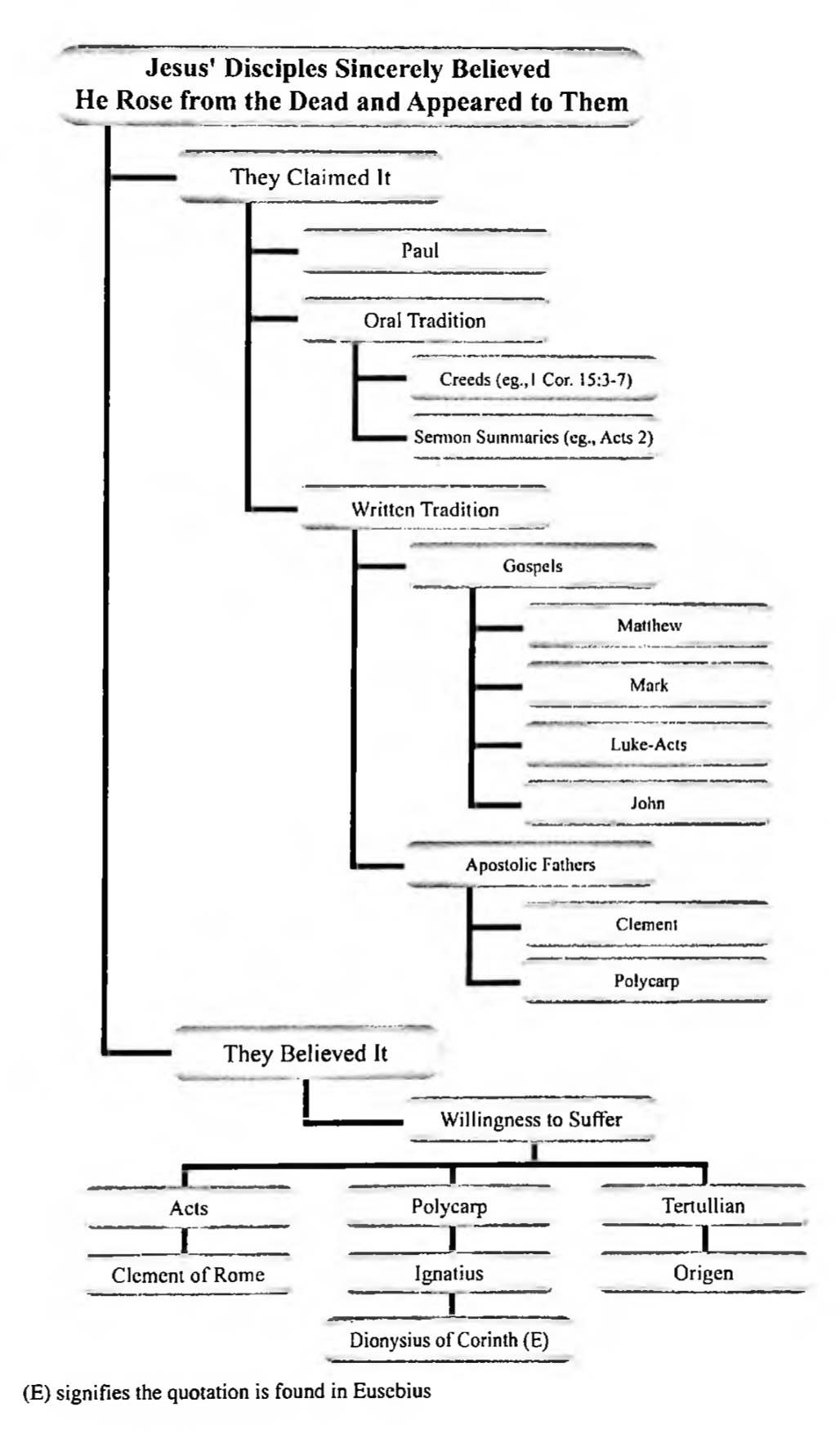
First, Jesus’ disciples claimed he rose from the dead and appeared to them. This conclusion can be reached from nine early and independent sources that fall into three categories: (1) the testimony of Paul about the disciples; (2) the oral tradition that passed through the early church; and (3) the written works of the early church.
(1) Many critical scholars hold that Paul received it from the disciples Peter and James while visiting them in Jerusalem three years after his conversion. If so, Paul learned it within five years of Jesus’ crucifixion and from the disciples themselves. At a minimum, we have source material that dates within two decades of the alleged event of Jesus’ resurrection and comes from a source that Paul thought was reliable. Dr. Dean John Rodgers comments, “This is the sort of data that historians of antiquity drool over.”
(2) Since tape recorders were unavailable in the first century, recorded dialogues, such as the sermons of Jesus and his apostles, had to have been summaries prepared after the fact by those who had heard them. Most sermons last longer than five minutes. Yet most of the sermons in the New Testament can be read in that amount of time or less. For these reasons and others, most scholars agree that many of the sermons in Acts contain oral summaries included in the text that can be traced to the earliest teachings of the church and possibly to the disciples themselves.
(3) The apostolic fathers are the church leaders who succeeded the apostles. It is probable that some of these men had fellowshipped with the apostles or were instructed and appointed by them, or they were close to others who had known the apostles. Therefore, there is a strong likelihood that their teachings can be traced back to the apostles themselves. The following apostolic fathers taught that the apostles were dramatically impacted by Jesus’ resurrection.
Clement of Rome, multiply attested by both Irenaus and Tertullian, writing to the Corinthians Church about the Apostle’s assurance says “therefore, having received orders and complete certainty caused by the resurrection of our Lord Jesus Christ and believing in the Word of God, they went with the Holy Spirit’s certainty, preaching the good news that the kingdom of God is about to come.”
Polycarp writing to the Philippians Church, multiply attested by Irenaus and Tertullian, writing about Paul and the Disciples, says “For they did not love the present age, but him who died for our benefit and for our sake was raised by God.”
New Testament critic at the University of Chicago, Norman Perrin, wrote, “The more we study the tradition with regard to the appearances, the firmer the rock begins to appear upon which they are based.”
They believed it
After Jesus’ death, the lives of the disciples were transformed to the point that they endured persecution and even martyrdom. Such strength of conviction indicates that they were not just claiming that Jesus rose from the dead and appeared to them in order to receive some personal benefit. They really believed it.
The book of Acts reports that the disciples were willing to suffer for their belief that the risen Jesus had appeared to them.
Clement of Rome reports the sufferings and probably the martyrdoms of Peter and Paul, “Because of envy and jealousy, the greatest and most righteous pillars have been persecuted and contended unto death. Let us set the good apostles before our eyes. Peter, who because of unrighteous envy endured, not one or two, but many afflictions, and having borne witness went to the due glorious place. Because of envy and rivalries, steadfast Paul pointed to the prize. Seven times chained, exiled, stoned, having become a preacher both in the East and in the West, he received honor fitting of his faith, having taught righteousness to the whole world, unto the boundary on which the sun sets; having testified in the presence of the leaders. Thus he was freed from the world and went to the holy place. He became a great example of steadfastness.”
Polycarp writes to the Church in Philippi, “They are in the place due them with the Lord, in association with him also they suffered together. For they did not love the present age…”
Ignatius writes to Polycarp en route to his martyrdom in Rome, “And when [Jesus] came to those with Peter, he said to them: ‘Take, handle me and see that I am not a bodiless demon.’ And immediately they handled him and believed, having known his flesh and blood. Because of this they also despised death; but beyond death they were found.”
Tertullian writing about the martyrdom of Peter and Paul says. “That Paul is beheaded has been written in their own blood. And if a heretic wishes his confidence to rest upon a public record, the archives of the empire will speak, as would the stones of Jerusalem. We read the lives of the Caesars: At Rome, Nero was the first who stained with blood the rising faith. Then is Peter girt by another, when he is made fast to the cross. Then does Paul obtain a birth suited to Roman citizenship, when in Rome he springs to life again ennobled by martyrdom.”
Additionally, we have Origen’s writings that relate that Peter had been crucified upside down and that Paul had been martyred in Rome under Nero. And Eusebius who for the martyrdoms of Peter and Paul, cites Dionysius of Corinth (writing about 170), Tertullian (writing about 200), and Origen (writing about 230-250). He cites Josephus (writing about 95), Hegesippus (writing about 165-175), and Clement of Alexandria (writing about 200), on the martyrdom of James the brother of Jesus.
In short, we have an enormous amount of evidence for this. 9 independent sources that multiply attests to the disciples claiming their post-mortem experience of Jesus and 7 independent sources that multiply attest to them believing it.
The highly critical atheist New Testament scholar Gerd Luudemann concludes, “It may be taken as historically certain that Peter and the disciples had experiences after Jesus’ death in which Jesus appeared to them as the risen Christ.”
3: Church Persecutor Paul converted due to a post-mortem experience of Jesus
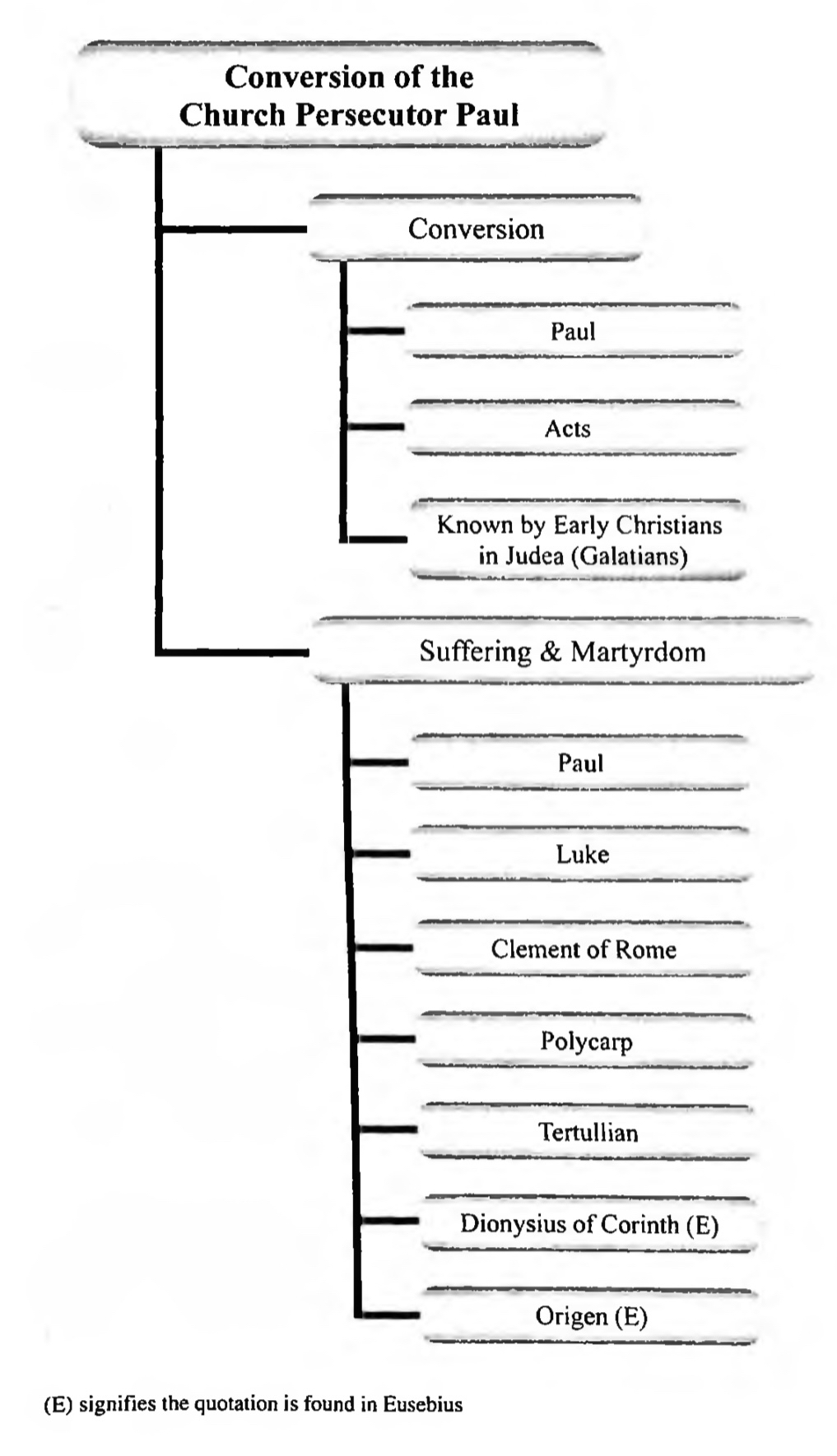
Paul’s notorious pre-Christian activities and conversion are multiply attested. We have Paul’s own testimony, Luke’s record in Acts, and a story that was circulating among Christians in Judea in Galatians.
His belief that he had witnessed the risen Christ was so strong that he, like the original disciples, was willing to suffer continuously for the sake of the gospel, even to the point of martyrdom. This point is well documented, reported by Paul himself, as well as Luke, Clement of Rome, Polycarp, Tertullian, Dionysius of Corinth, and Origen. Therefore, we have early, multiple, and first-hand testimony that Paul converted from being a staunch opponent of Christianity to one of its greatest proponents. 3 for his conversion, 7 for his suffering and martyrdom.
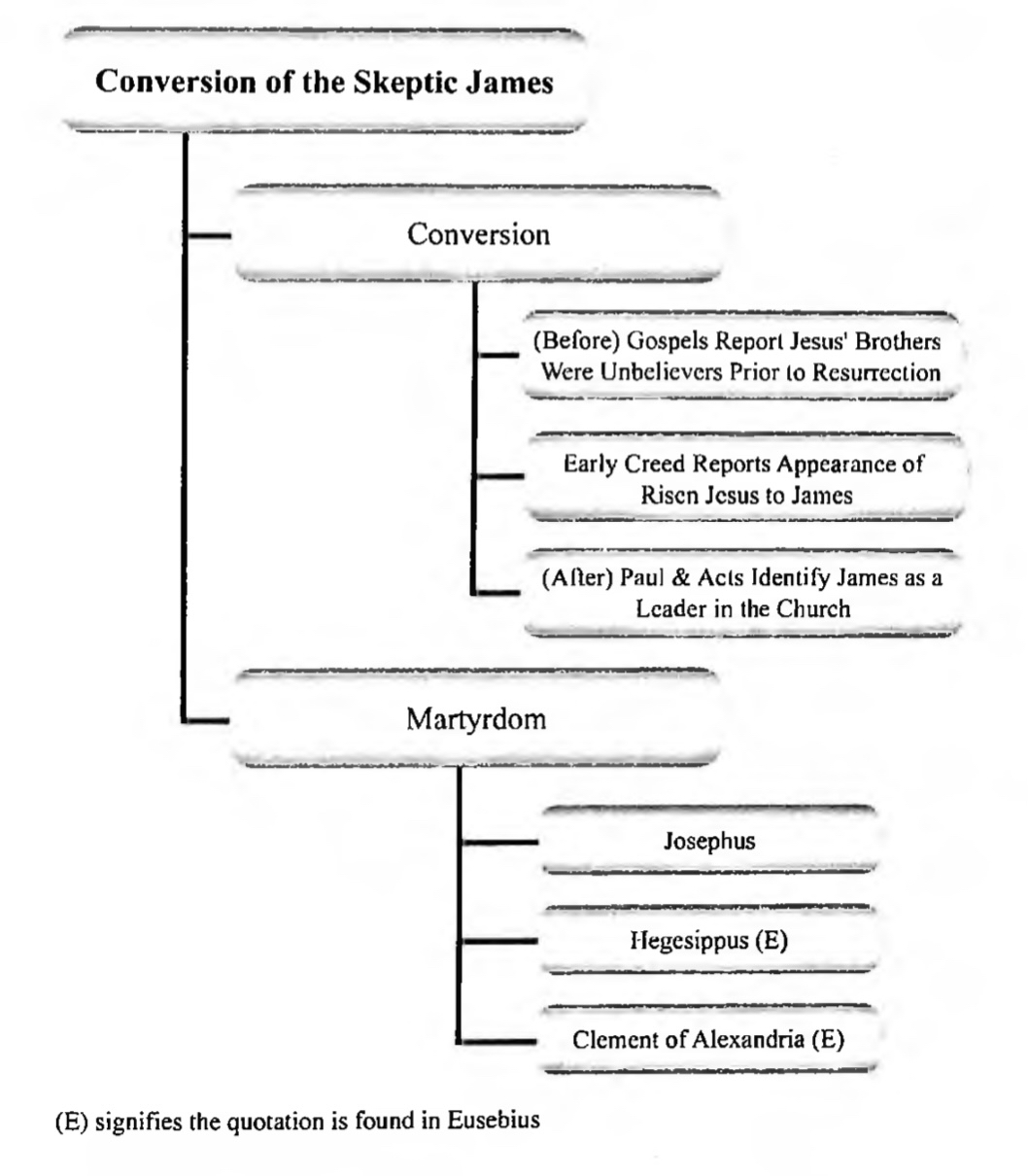
4: Sceptical brother of Jesus, James, converted due to a post-mortem experience of Jesus.
There are 4 reasons:
- The Gospels report that Jesus’ brothers, including James, were unbelievers during his ministry (Mark 3:21, 31; 6:3-4; John 7:5).
- The ancient creedal material in 1 Corinthians 15:3-7 that we discussed earlier lists an appearance of the risen Jesus to James: “then He appeared to James.”
- Subsequent to the alleged event of Jesus’ resurrection, James is identified as a leader of the Jerusalem church (Acts 15:12-21; Gal. 1:19).
- Not only did James convert to Christianity, his beliefs in Jesus and his
resurrection were so strong that he died as a martyr because of them. James’s martyrdom is attested by Josephus, Hegesippus, and Clement of Alexandria. We no longer have any of the works of Hegesippus or the writings of Clement where the event is mentioned. However, sections have been preserved by Eusebius. Therefore, his martyrdom is attested by both Christian and non-Christian sources.
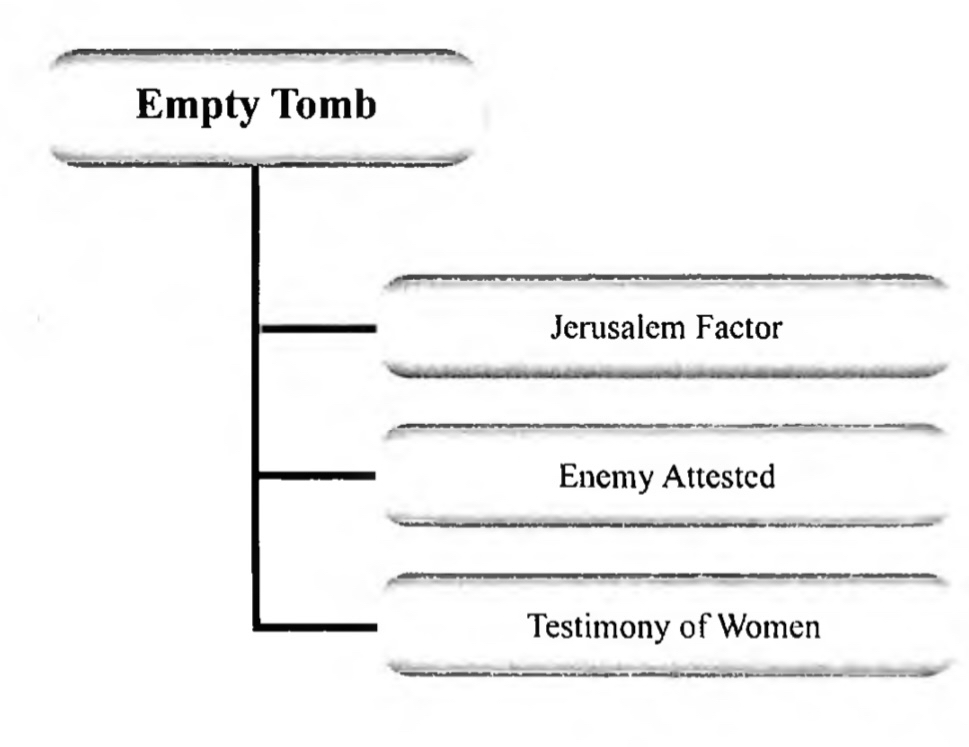
5: Tomb of Jesus became Empty
There are 3 reasons why this is the case.
Jerusalem factor
Jesus was publicly executed in Jerusalem. His post-mortem appearances and empty tomb were first proclaimed publicly there. It would have been impossible for Christianity to get off the ground in Jerusalem if the body had still been in the tomb. His enemies in the Jewish leadership and Roman government would only have had to exhume the corpse and publicly display it for the hoax to be shattered. Not only are Jewish, Roman, and all other writings absent of such an account, but there is total silence from Christianity’s critics who would have jumped at the evidence of this sort.
Enemy attestations
If your mother says that you are an honest person, we may have reason to believe her, yet with reservation, since she loves you and is somewhat biased. However, if someone who hates you admits that you are an honest person, we have a stronger reason to believe what is being asserted, since potential bias does not exist. The empty tomb is attested not only by Christian sources. Jesus’ enemies admitted it as well, albeit indirectly. Hence, we are not employing an argument from silence. Rather than point to an occupied tomb, early critics accused Jesus’ disciples of stealing the body (Matt. 28:12-13; Justin Martyr, Trypho 108; Tertullian, De Spectaculis 30). There would have been no need for an attempt to account for a missing body if the body had still been in the tomb.
The testimony of women
When we come to the account of the empty tomb, women are listed as the primary witnesses. They are not only the first witnesses mentioned. They are also mentioned in all four gospels, whereas male witnesses appear only later and in two gospels. This would be an odd invention since, in both Jewish and Roman cultures, women were lowly esteemed and their testimony was regarded as questionable, certainly not as credible as a man’s. Consider that Jewish writings, like the Talmud who treat the testimony the same as those of robbers.
Given the low first-century view of women that was frequently shared by Jew and Gentile, it seems highly unlikely that the Gospel authors would either invent or adjust such testimonies. That would mean placing words in the mouths of those who would not be believed by many, making them the primary witnesses to the empty tomb. If the Gospel writers had originated the story of the empty tomb, it seems far more likely that they would have depicted men discovering its vacancy and being the first to see the risen Jesus. Why would they not list the male disciples, Joseph of Arimathea and Nicodemus, and avoid the female issue altogether? Thus, the empty tomb appears to be historically credible in light of the principle of embarrassment. The empty tomb is, therefore, well evidenced for historical certainty.
Former Oxford University church historian William Wand writes, “All the strictly historical evidence we have is in favor of [the empty tomb), and those scholars who reject it ought to recognize that they do so on some other ground than that of scientific history.” It is widely known that all naturalistic explanations given throughout the ages have failed, for instance, the Jesus mythic hypothesis (that Jesus never existed) is universally rejected given that it fails to account for all the historical sources cited above, or that the disciples/someone stolen the body fails to account for the conversion of Paul and James due to the appearances of Jesus which are independent, or that the hypothesis that the disciples were hallucinating is an unprecedented psychological event of group hallucination and fails to account for the fact that consciousness is first-person and unique to each person, and it also fails to account the empty tomb. These naturalistic hypothesises, and an ad hoc mix of them are widely known to fail to account for all the evidence for the Resurrection and to respect the historical method. A full detailed analysis of them is beyond the scope of this paper, and one is encouraged to read the book The Case for the Resurrection of Jesus by Gary Habermas and Mike Licona, two of the greatest historians in the world for this topic, for further comprehensive treatment of these naturalistic hypothesises, to show why they all fail.
And hence given all our considerations, what follows is that the best explanation of these facts, namely Jesus was crucified, he was seen again later by many people, and his tomb was empty, is that the Resurrection occurs as a demonstrable historical event of the fingerprints of the Christian God.
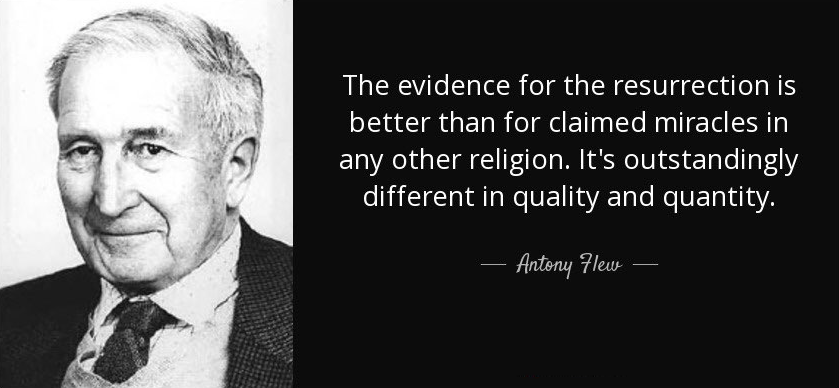
Let us close this paper with the words of the greatest atheist philosopher of the 20th century, Anthony Flew, on what he has to say about this topic and argument.

The evidence is so powerful it compelled very intelligent and skeptical atheists to believe in it as well.
Even the once-doubting Sir Lionel Luckhoo, identified by the Guinness Book of World Records as the most successful attorney in the world, was forced to conclude after an exhaustive analysis of the evidence, “I say unequivocally that the evidence for the resurrection of Jesus Christ is so overwhelming that it compels acceptance by proof which leaves absolutely no room for doubt.”
 Koran Contradiction