
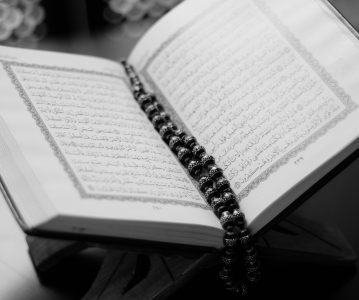

Or the Tajwid of the scholars of Islam.
Stop/pause symbols
These tell you whether to stop, pause, or continue:
- مـ – Must stop (Waqf Lāzim)
- لا – Do not stop
- ج – Permissible stop
- قلى – Better to stop
- صلى – Better to continue
There is also this:
- – End of verse (Waqf al‑Kalim)
Madd (elongation) symbols
These indicate how long to stretch a vowel – 2, 4, or 6 counts, depending on the mark.
Pronunciation‑change symbols
- ۜ – indicates reading “ṣād” as “sīn” in certain recitations
Sujūd symbol
- ۩ – marks a verse requiring prostration
Paired dots
- ۛ – three dots marking “stop at one of these two places, but not both”
Why do they exist?
The earliest Qur’ans had no dots, no vowels, no stop marks. As Islam spread, readers needed help to avoid mispronunciation. Scholars gradually added:
- Vowel marks (7th–8th century)
- Consonant dots
- Tajwīd symbols (later standardised)
These are aids, not part of the Qur’anic text itself.
As you can see, the Koran spread textually, not orally and wasn’t memorised from oral recitation.
This article was produced with the help of MS Copilot. Why? Because I’m illiterate in Arabic.

