

Muslim apologists often complain that the Torah and Bible, while correct in the time of Muhammad, are now hopelessly corrupted, except for the parts about Muhammad. This is an innovation (AKA lie) of Islam and Muslims to hide the problem of Muhammad being ignorant of both the Torah and the Bible, along with false claims of Muhammad being in the Torah or Bible.
Muhammad and his Muslims had the Torah read to them:
Narrated Abu Huraira:
The people of the Book used to read the Torah in Hebrew and then explain it in Arabic to the Muslims.
Allah’s Messenger said (to the Muslims). “Do not believe the people of the Book, nor disbelieve them, but say, ‘We believe in Allah and whatever is revealed to us, and whatever is revealed to you.’ “
Sahih al-Bukhari 7362
Koran about Torah
Here are the verses of the Koran that are used to “justify” the charges of corruption in the Torah and Bible:
Do you covet [the hope, O believers], that they would believe for you while a party of them used to hear the words of Allāh and then distort it [i.e., the Torah] after they had understood it while they were knowing?
Koran 2:75
Notice carefully that they “used to hear the words of Allāh” and then “distort it”. This isn’t about distorting the text, but about speaking of the text.
And indeed, there is among them a party who alter the Scripture with their tongues so you may think it is from the Scripture, but it is not from the Scripture.
And they say, “This is from Allāh,” but it is not from Allāh.
And they speak untruth about Allāh while they know.
Koran 3:78
Notice “with their tongues” and “they speak untruth”. Again, it is about people lying and not speaking or reciting the text.
All food was lawful to the Children of Israel except what Israel [i.e., Jacob] had made unlawful to himself before the Torah was revealed.
Say, [O Muḥammad], “So bring the Torah and recite it, if you should be truthful.”
Koran 3:93
Note that the verse presumes that the written Torah is truthful, by Muhammad and Muhammad pretending to be Allah.
Among the Jews are those who distort words from their [proper] places [i.e., usages] and say, “We hear and disobey” and “Hear but be not heard” and “Rāʿinā,” twisting their tongues and defaming the religion.
Excerpt, Koran 4:46
Again note “twisting their tongues”. Again, it’s about speaking the text.
They distort words from their [proper] places [i.e., usages] and have forgotten a portion of that of which they were reminded.
Excerpt, Koran 5:13
Notice they “distort words” and have “forgotten a portion”. Again, speaking the text and deliberately omitting some of it.
O Messenger, let them not grieve you who hasten into disbelief of those who say, “We believe” with their mouths, but their hearts believe not, and from among the Jews.
[They are] avid listeners to falsehood, listening to another people who have not come to you.
They distort words beyond their [proper] places [i.e., usages], saying, “If you are given this, take it; but if you are not given it, then beware.”
Excerpt, Koran 5:41
Notice they “distort words”, which is speaking the text.
Indeed, those who inject deviation into Our verses are not concealed from Us. So, is he who is cast into the Fire better or he who comes secure on the Day of Resurrection? Do whatever you will; indeed, He is Seeing of what you do.
Koran 41:40
In this verse, “Us”, the demon, Jibril inside Muhammad, admits that others inject “deviation into Our verses”. That’s Muhammad admitting to the corruption of the Koran.
Bible
Note that the Koran has no verses about distortion or corruption in the Bible.
But, Infidel, what about Koran 2:79?
So woe to those who write the “scripture” with their own hands, then say, “This is from Allāh,” in order to exchange it for a small price. Woe to them for what their hands have written and woe to them for what they earn.
Koran 2:79
No one does this apart from Muslims. For example:
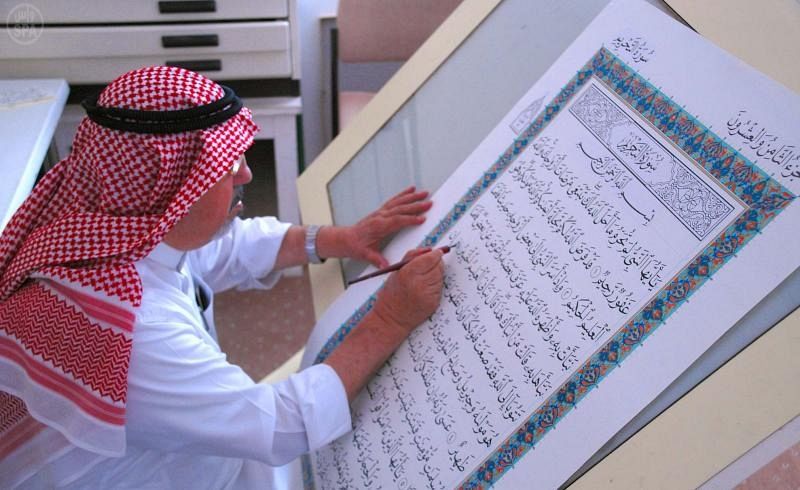
Obviously, none of this comes from Allah despite Muslims claiming: “This (Koran) is from Allah!”
This hadith confirms that the Gospel is not corrupted:
Amir b. Shahr said:
I was with the Negus when his son recited a verse of the Gospel. So I laughed. Thereupon he said: “Do you laugh at the word of Allah, the Exalted?”
Sunan Abi Dawud 4736
Explanation
The claim of corruption of the Torah comes from an incident where a Jew and a Jewess were caught in adultery, according to the Sahih hadith in Bukhari:
A Jew and a Jewess were brought to Allah’s Messenger on a charge of committing an illegal sexual intercourse.
The Prophet asked them. “What is the legal punishment (for this sin) in your Book (Torah)?”
They replied, “Our priests have innovated the punishment of blackening the faces with charcoal and Tajbiya [sic] {Lashing}.”
Abdullah bin Salam said, “O Allah’s Messenger, tell them to bring the Torah.”
The Torah was brought, and then one of the Jews put his hand over the Divine Verse of the Rajam (stoning to death) and started reading what preceded and what followed it.
On that, Ibn Salam said to the Jew, “Lift up your hand.”
Behold! The Divine Verse of the Rajam was under his hand.
So Allah’s Apostle ordered that the two (sinners) be stoned to death, and so they were stoned.
Ibn Umar added: “So both of them were stoned at the Balat and I saw the Jew sheltering the Jewess.”
Sahih al-Bukhari 6819
Notice: “one of the Jews put his hand over the Divine Verse of the Rajam (stoning to death) and started reading what preceded and what followed it.”
The Jews came to Allah’s Messenger and told him that a man and a woman from amongst them had committed illegal sexual intercourse.
Allah’s Messenger said to them, “What do you find in the Torah (old Testament) about the legal punishment of Ar-Rajm (stoning)?”
They replied, “(But) we announce their crime and lash them.”
Abdullah bin Salam said, “You are telling a lie; Torah contains the order of Rajm.”
They brought and opened the Torah and one of them solaced [sic] {so placed} his hand on the Verse of Rajm and read the verses preceding and following it.
Abdullah bin Salam said to him, “Lift your hand.”
When he lifted his hand, the Verse of Rajm was written there.
They said, “Muhammad has told the truth; the Torah has the Verse of Rajm.
The Prophet then gave the order that both of them should be stoned to death.
Abdullah bin Umar said, “I saw the man leaning over the woman to shelter her from the stones.”
Sahih al-Bukhari 3635
The Jews came to Allah’s Messenger and mentioned to him that a man and a lady among them had committed illegal sexual intercourse.
Allah’s Messenger said to them, “What do you find in the Torah regarding the Rajam?”
They replied, “We only disgrace and flog them with stripes.”
Abdullah bin Salam said to them, “You have told a lie the penalty of Rajam is in the Torah.”
They brought the Torah and opened it.
One of them put his hand over the verse of the Rajam and read what was before and after it.
Abdullah bin Salam said to him, “Lift up your hand.”
Where he lifted it there appeared the verse of the Rajam.
So they said, “O Muhammad! He has said the truth, the verse of the Rajam is in it (Torah).”
Then Allah’s Messenger ordered that the two persons (guilty of illegal sexual intercourse) be stoned to death, and so they were stoned, and I saw the man bending over the woman so as to protect her from the stones.
Sahih al-Bukhari 6841
Sahih Muslim:
Abdullah b. ‘Umar reported that a Jew and a Jewess were brought to Allah’s Messenger who had committed adultery.
Allah’s Messenger came to the Jews and said: “What do you find in Torah for one who commits adultery?”
They said: “We darken their faces and make them ride on the donkey with their faces turned to the opposite direction (and their backs touching each other), and then they are taken round (the city).”
He said: “Bring Torah if you are truthful.”
They brought it and recited it until when they came to the verse pertaining to stoning, the person who was reading placed his hand on the verse pertaining to stoning, and read (only that which was) between his hands and what was subsequent to that.
Abdullah b. Salim who was at that time with the Messenger of Allah said: “Command him (the reciter) to lift his hand.”
He lifted it and there was, underneath that, the verse pertaining to stoning.
Allah’s Messenger pronounced judgment about both of them and they were stoned.
Abdullah b. ‘Umar said: “I was one of those who stoned them, and I saw him (the Jew) protecting her (the Jewess) with his body.”
Sahih Muslim 1699a
Sunan Ibn Majah:
The Messenger of Allah passed by a Jew with a blackened face who had been flogged. He called them and said: “Is this the punishment for the adulterer that you find in your Book?”
They said: “Yes.”
Then he called one of their scholars and said: “I adjure you by Allah Who sent down the Tawrah (Torah) to Musa! Is this the punishment for the adulterer that you find in your Book?”
He said: “No; if you had not adjured me by Allah, I would not have told you. The punishment for the adulterer that we find in our Book is stoning, but many of our nobles were being stoned (because of the prevalence of adultery among them), so if we caught one of our nobles (committing adultery), we would let him go; but if we caught one of the weak among us, we would carry out the punishment on him. We said: ‘Come, let us agree upon something that we may impose on both noble and weak alike.’ So we agreed to blacken the face and whip them, instead of stoning.’
The Prophet “O Allah, I am the first of those who revive your command which they had killed off”, and he issued orders that (the man) be stoned.
Sunan Ibn Majah 2558
The Torah verse on stoning for adultery was concealed by the Jewish reciter of the Torah. This then leads to the claims of corruption by Muslim apologists, to cover for the fact that Muhammad was ignorant of the Torah and the Bible.
For more, see Koran – Confirms Scripture?
The people passed by the Messenger of Allah with a Jew who was blackened with charcoal and who was being flogged.
He called them and said: “Is this the prescribed punishment for a fornicator?”
They said: “Yes.”
He then called on a learned man among them and asked him: “I adjure you by Allah Who revealed the Torah to Moses, do you find this prescribed punishment for a fornicator in your divine Book?”
He said: “By Allah, no. If you had not adjured me about this, I should not have informed you. We find stoning to be prescribed punishment for a fornicator in our Divine Book. But it (fornication) became frequent in our people of rank; so when we seized a person of rank, we left him alone, and when we seized a weak person, we inflicted the prescribed punishment on him. So we said: ‘Come, let us agree on something which may be enforced equally on people of higher and lower rank. So we agreed to blacken the face of a criminal with charcoal, and flog him, and we abandoned stoning.'”
The Messenger of Allah then said: “O Allah, I am the first to give life to Thy command which they have killed.” So he commanded regarding him (the Jew) and he was stoned to death.
Allah Most High then sent down: “O Apostle, let not those who race one another into unbelief, make thee grieve…” up to “They say: If you are given this, take it, but if not, beware!….” up to “And if any do fail to judge by (the light of) what Allah hath revealed, they are (no better than) unbelievers,” about Jews, up to “And if any do fail to judge by (the right of) what Allah hath revealed, they are no better than) wrong-doers” about Jews: and revealed the verses up to “And if any do fail to judge by (the light of) what Allah hath revealed, they are (no better than) those who rebel.”
About this he said: “This whole verse was revealed about the infidels.”
Sunan Abi Dawud 4448
This hadith shows that some Koran verses were “sent down” in response to this incident. I think these verses are now in Koran 5:41-44. I believe the hadith copy of the Koran uses the Pickthall translation, not the Sahih International translation I use.
Later:
I used to teach (the Qur’an to) some people of the Muhajirln (emigrants), among whom there was Abdur Rahman bin Auf. While I was in his house at Mina, and he was with Umar bin Al-Khattab during Umar’s last Hajj, Abdur-Rahman came to me and said, “Would that you had seen the man who came today to the Chief of the Believers (Umar), saying, ‘O Chief of the Believers! What do you think about so-and-so who says, ‘If Umar should die, I will give the pledge of allegiance to such-andsuch person, as by Allah, the pledge of allegiance to Abu Bakr was nothing but a prompt sudden action which got established afterwards.’ Umar became angry and then said, ‘Allah willing, I will stand before the people tonight and warn them against those people who want to deprive the others of their rights (the question of rulership). Abdur-Rahman said, “I said, ‘O Chief of the believers! Do not do that, for the season of Hajj gathers the riff-raff and the rubble, and it will be they who will gather around you when you stand to address the people. And I am afraid that you will get up and say something, and some people will spread your statement and may not say what you have actually said and may not understand its meaning, and may interpret it incorrectly, so you should wait till you reach Medina, as it is the place of emigration and the place of Prophet’s Traditions, and there you can come in touch with the learned and noble people, and tell them your ideas with confidence; and the learned people will understand your statement and put it in its proper place.’ On that, Umar said, ‘By Allah! Allah willing, I will do this in the first speech I will deliver before the people in Medina.” Ibn Abbas added: We reached Medina by the end of the month of Dhul-Hijja, and when it was Friday, we went quickly (to the mosque) as soon as the sun had declined, and I saw Said bin Zaid bin Amr bin Nufail sitting at the corner of the pulpit, and I too sat close to him so that my knee was touching his knee, and after a short while Umar bin Al-Khattab came out, and when I saw him coming towards us, I said to Said bin Zaid bin Amr bin Nufail “Today Umar will say such a thing as he has never said since he was chosen as Caliph.” Said denied my statement with astonishment and said, “What thing do you expect Umar to say the like of which he has never said before?” In the meantime, Umar sat on the pulpit and when the callmakers for the prayer had finished their call, Umar stood up, and having glorified and praised Allah as He deserved, he said, “Now then, I am going to tell you something which (Allah) has written for me to say. I do not know; perhaps it portends my death, so whoever understands and remembers it, must narrate it to the others wherever his mount takes him, but if somebody is afraid that he does not understand it, then it is unlawful for him to tell lies about me. Allah sent Muhammad with the Truth and revealed the Holy Book to him, and among what Allah revealed, was the Verse of the Rajam (the stoning of married person (male & female) who commits illegal sexual intercourse, and we did recite this Verse and understood and memorized it. Allah’s Messenger (ﷺ) did carry out the punishment of stoning and so did we after him. I am afraid that after a long time has passed, somebody will say, ‘By Allah, we do not find the Verse of the Rajam in Allah’s Book,’ and thus they will go astray by leaving an obligation which Allah has revealed. And the punishment of the Rajam is to be inflicted to any married person (male & female), who commits illegal sexual intercourse, if the required evidence is available or there is conception or confession. And then we used to recite among the Verses in Allah’s Book: ‘O people! Do not claim to be the offspring of other than your fathers, as it is disbelief (unthankfulness) on your part that you claim to be the offspring of other than your real father.’ Then Allah’s Messenger (ﷺ) said, ‘Do not praise me excessively as Jesus, son of Marry was praised, but call me Allah’s Slave and His Apostles.’ (O people!) I have been informed that a speaker amongst you says, ‘By Allah, if Umar should die, I will give the pledge of allegiance to such-and-such person.’ One should not deceive oneself by saying that the pledge of allegiance given to Abu Bakr was given suddenly and it was successful. No doubt, it was like that, but Allah saved (the people) from its evil, and there is none among you who has the qualities of Abu Bakr. Remember that whoever gives the pledge of allegiance to anybody among you without consulting the other Muslims, neither that person, nor the person to whom the pledge of allegiance was given, are to be supported, lest they both should be killed. And no doubt after the death of the Prophet (ﷺ) we were informed that the Ansar disagreed with us and gathered in the shed of Bani Sada. Ali and Zubair and whoever was with them, opposed us, while the emigrants gathered with Abu Bakr. I said to Abu Bakr, ‘Let’s go to these Ansari brothers of ours.’ So we set out seeking them, and when we approached them, two pious men of theirs met us and informed us of the final decision of the Ansar, and said, ‘O group of Muhajirin (emigrants) ! Where are you going?’ We replied, ‘We are going to these Ansari brothers of ours.’ They said to us, ‘You shouldn’t go near them. Carry out whatever we have already decided.’ I said, ‘By Allah, we will go to them.’ And so we proceeded until we reached them at the shed of Bani Sada. Behold! There was a man sitting amongst them and wrapped in something. I asked, ‘Who is that man?’ They said, ‘He is Sad bin ‘Ubada.’ I asked, ‘What is wrong with him?’ They said, ‘He is sick.’ After we sat for a while, the Ansar’s speaker said, ‘None has the right to be worshipped but Allah,’ and praising Allah as He deserved, he added, ‘To proceed, we are Allah’s Ansar (helpers) and the majority of the Muslim army, while you, the emigrants, are a small group and some people among you came with the intention of preventing us from practicing this matter (of caliphate) and depriving us of it.’ When the speaker had finished, I intended to speak as I had prepared a speech which I liked and which I wanted to deliver in the presence of Abu Bakr, and I used to avoid provoking him. So, when I wanted to speak, Abu Bakr said, ‘Wait a while.’ I disliked to make him angry. So Abu Bakr himself gave a speech, and he was wiser and more patient than I. By Allah, he never missed a sentence that I liked in my own prepared speech, but he said the like of it or better than it spontaneously. After a pause he said, ‘O Ansar! You deserve all (the qualities that you have attributed to yourselves, but this question (of Caliphate) is only for the Quraish as they are the best of the Arabs as regards descent and home, and I am pleased to suggest that you choose either of these two men, so take the oath of allegiance to either of them as you wish. And then Abu Bakr held my hand and Abu Ubaida bin al-Jarrah’s hand who was sitting amongst us. I hated nothing of what he had said except that proposal, for by Allah, I would rather have my neck chopped off as expiator for a sin than become the ruler of a nation, one of whose members is Abu Bakr, unless at the time of my death my own-self suggests something I don’t feel at present.’ And then one of the Ansar said, ‘I am the pillar on which the camel with a skin disease (eczema) rubs itself to satisfy the itching (i.e., I am a noble), and I am as a high class palm tree! O Quraish. There should be one ruler from us and one from you.’ Then there was a hue and cry among the gathering and their voices rose so that I was afraid there might be great disagreement, so I said, ‘O Abu Bakr! Hold your hand out.’ He held his hand out and I pledged allegiance to him, and then all the emigrants gave the Pledge of allegiance and so did the Ansar afterwards. And so we became victorious over Sad bin Ubada (whom Al-Ansar wanted to make a ruler). One of the Ansar said, ‘You have killed Sad bin Ubada.’ I replied, ‘Allah has killed Sad bin Ubada.’ Umar added, “By Allah, apart from the great tragedy that had happened to us (i.e. the death of the Prophet), there was no greater problem than the allegiance pledged to Abu Bakr because we were afraid that if we left the people, they might give the Pledge of allegiance after us to one of their men, in which case we would have given them our consent for something against our real wish, or would have opposed them and caused great trouble. So if any person gives the Pledge of allegiance to somebody (to become a Caliph) without consulting the other Muslims, then the one he has selected should not be granted allegiance, lest both of them should be killed.”
Sahih al-Bukhari 6830
The charge of the Muslim apologists that the Torah and Bible are corrupt originated from here, with the Jews not applying the punishment of stoning to their people, and then Muhammad being helped to notice this conflict between Torah law and the less severe punishment by the Jews.
Another Opinion
Muhammad was a false prophet, for a false god, Allah, for a false religion, Islam, without even a false book, the Koran.

