
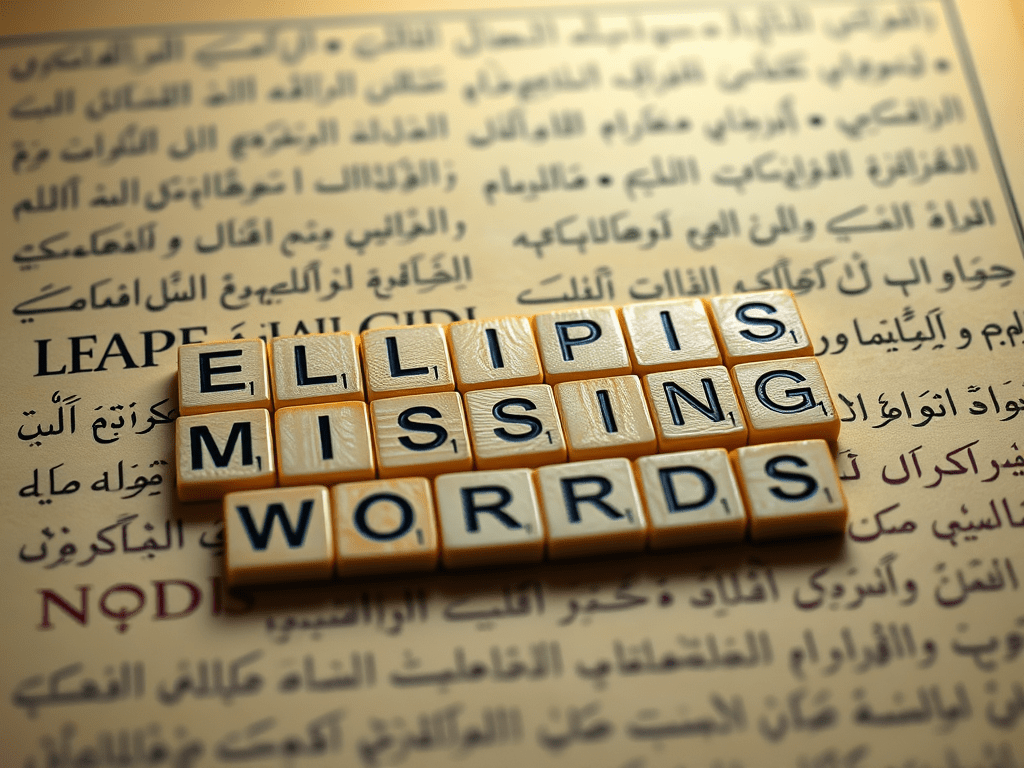
In the Sahih International or “Saheeh International” translation, there are several uses of “…” (ellipsis), which indicates missing words or phrases. What’s an ellipsis?
the omission from speech or writing of a word or words that are superfluous or able to be understood from contextual clues.
Meaning of Ellipsis
Here’s one example:
Koran 8:50
And if you could but see when the angels take the souls of those who disbelieved…
They are striking their faces and their backs and [saying], “Taste the punishment of the Burning Fire.
Koran 8:50
The footnote is:
This sentence is left incomplete for additional effect. Its conclusion is left to the imagination of the reader or listener and estimated as “…you would see a dreadful sight.”
Footnote, Koran 8:50
So let’s expand the Koran verse with the “estimated” words:
And if you could but see when the angels take the souls of those who disbelieved you would see a dreadful sight.
They are striking their faces and their backs and [saying], “Taste the punishment of the Burning Fire.
Estimated, Koran 8:50
So are these missing Arabic words from Allah’s Qur’an written by the Pen on the Preserved Tablets? Or just “…”, an English written language convention? If so, why is Allah’s revelation… multi-lingual? Also, how does Muhammad say “…”?

There’s more ellipsis:
Koran 11:88
He said, “O my people, have you considered: if I am upon clear evidence from my Lord and He has provided me with a good provision from Him…?
And I do not intend to differ from you in that which I have forbidden you; I only intend reform as much as I am able. And my success is not but through Allāh. Upon Him I have relied, and to Him I return.
Koran 11:88
The footnote is:
The conclusion of the sentence is estimated as “…would it not be my duty to warn you against corruption and disobedience?”
Footnote, Koran 11:88
Thus, the expanded verse with the “estimated” words is:
He said, “O my people, have you considered: if I am upon clear evidence from my Lord and He has provided me with a good provision from Him would it not be my duty to warn you against corruption and disobedience?
And I do not intend to differ from you in that which I have forbidden you; I only intend reform as much as I am able. And my success is not but through Allāh. Upon Him I have relied, and to Him I return.
Estimated, Koran 11:88
Koran 12:15
So when they took him [out] and agreed to put him into the bottom of the well…
But We inspired to him, “You will surely inform them [someday] about this affair of theirs while they do not perceive [your identity].”
Koran 12:15
The footnote is:
The conclusion of this sentence is estimated to be “…they tormented him.”
Footnote, Koran 12:15
Thus, the expanded verse with the “estimated” words is:
So when they took him [out] and agreed to put him into the bottom of the well they tormented him.
But We inspired to him, “You will surely inform them [someday] about this affair of theirs while they do not perceive [your identity].”
Estimated, Koran 12:15
Koran 16:106
Whoever disbelieves in [i.e., denies] Allāh after his belief…
except for one who is forced [to renounce his religion] while his heart is secure in faith.
But those who [willingly] open their breasts to disbelief, upon them is wrath from Allāh, and for them is a great punishment;
Koran 16:106
The footnote is:
Based upon the conclusion of this verse, the omitted phrase concerning the apostate is understood to be “…has earned the wrath of Allāh…”
Footnote, Koran 16:106
Thus, the expanded verse with the “estimated” words is:
Whoever disbelieves in [i.e., denies] Allāh after his belief has earned the wrath of Allāh except for one who is forced [to renounce his religion] while his heart is secure in faith.
But those who [willingly] open their breasts to disbelief, upon them is wrath from Allāh, and for them is a great punishment;
Estimated, Koran 16:106
Koran 21:39
If those who disbelieved but knew the time when they will not avert the Fire from their faces or from their backs and they will not be aided…
Koran 21:39
The footnote is:
The completion of the sentence is understood to be “…they would not be asking in disbelief and ridicule to be shown the punishment.”
Footnote, Koran 21:39
Thus, the expanded verse with the “estimated” words is:
If those who disbelieved but knew the time when they will not avert the Fire from their faces or from their backs and they will not be aided they would not be asking in disbelief and ridicule to be shown the punishment.
Estimated, Koran 21:39
Koran 24:10
And if not for the favor of Allāh upon you and His mercy… and because Allāh is Accepting of Repentance and Wise.
Koran 24:10
The footnote is:
The phrase omitted is estimated to be “…you would have surely been punished, destroyed or scandalized,” or “…you would have suffered many difficult situations.”
Footnote, Koran 24:10
Thus, the expanded verse with the “estimated” words is:
And if not for the favor of Allāh upon you and His mercy
Either:
you would have surely been punished, destroyed or scandalized,
Or:
you would have suffered many difficult situations
Estimated, Koran 24:10
Obviously, Allah’s eternal tablets need to be twice the size for this version.
Koran 26:56
And indeed, we are a cautious society…”
Koran 26:56
There’s no footnote. Perhaps it was forgotten?
Koran 28:47
And if not that a disaster should strike them for what their hands put forth [of sins] and they would say, “Our Lord, why did You not send us a messenger so we could have followed Your verses and been among the believers?”…
Koran 28:47
The footnote is:
The conclusion of the sentence is understood to be “…We would not have sent messengers,” meaning that Allāh sent messengers and sent Muḥammad with the final scripture to mankind so that no one could claim that punishment was imposed unjustly without warning.
Footnote, Koran 28:47
Thus, the expanded verse with the “estimated” words is:
And if not that a disaster should strike them for what their hands put forth [of sins] and they would say, “Our Lord, why did You not send us a messenger so we could have followed Your verses and been among the believers?”, We would not have sent messengers.
Estimated, Koran 28:47
Koran 34:31
And those who disbelieve say, “We will never believe in this Qur’ān nor in that before it.”
But if you could see when the wrongdoers are made to stand before their Lord, refuting each others’ words…
Those who were oppressed will say to those who were arrogant, “If not for you, we would have been believers.”
Koran 34:31
The footnote is:
Having been left to the imagination, the conclusion of this sentence is estimated to be “…you would see a dreadful sight.”
Footnote, Koran 34:31
Thus, the expanded verse with the “estimated” words is:
And those who disbelieve say, “We will never believe in this Qur’ān nor in that before it.”
But if you could see when the wrongdoers are made to stand before their Lord, refuting each other’s words, you would see a dreadful sight.
Those who were oppressed will say to those who were arrogant, “If not for you, we would have been believers.”
Estimated, Koran 34:31
I corrected the apostrophe position (“other’s”).
Koran 36:45
But when it is said to them, “Beware of what is before you and what is behind you; perhaps you will receive mercy…”
Koran 36:45
The footnote is:
The conclusion of this sentence is understood to be “…they ignored the warning.”
Footnote, Koran 36:45
Thus, the expanded verse with the “estimated” words is:
But when it is said to them, “Beware of what is before you and what is behind you; perhaps you will receive mercy they ignored the warning.”
Estimated, Koran 36:45
Koran 38:1
Ṣād.
By the Qur’ān containing reminder…
Koran 38:1
The footnote is:
The completion of the oath is understood to be that the Qur’ān is inimitable and thus a miracle from Allāh.
Footnote, Koran 38:1
So there’s no expanded verse.
Koran 41:41
Indeed, those who disbelieve in the message [i.e., the Qur’ān] after it has come to them… And indeed, it is a mighty Book.
Koran 41:41
The footnote is:
The conclusion is understood to be “…will have earned an indescribable punishment.”
Footnote, Koran 41:41
Thus, the expanded verse with the “estimated” words is:
Indeed, those who disbelieve in the message [i.e., the Qur’ān] after it has come to them will have earned an indescribable punishment. And indeed, it is a mighty Book.
Estimated, Koran 41:41
Koran 46:10
Say, “Have you considered: if it [i.e., the Qur’ān] was from Allāh, and you disbelieved in it while a witness from the Children of Israel has testified to something similar and believed while you were arrogant…?” Indeed, Allāh does not guide the wrongdoing people.
Koran 46:10
The footnote is:
The conclusion is estimated to be “…would you not then be the most unjust of people?” or “…in what condition would you then be?”
Footnote, Koran 46:10
I didn’t bother with expanding this out.
Koran 50:1
Qāf.
By the honored Qur’ān…
Koran 50:1
The footnote is the same as Korann 38:1 above.
Koran 77:11
And when the messengers’ time has come…
Koran 77:11
The footnote is:
i.e., when they are gathered to witness concerning their nations. The sentence’s conclusion is understood to be “…the promised judgement will then take place.”
Footnote, Koran 77:11
Thus, the expanded verse with the “estimated” words is:
And when the messengers’ time has come, the promised judgement will then take place.
Estimated, Koran 77:11
I’ve added a comma after “come”.
Koran 102:5
No! If you only knew with knowledge of certainty…
Koran 102:5
The footnote is:
The conclusion of this verse is estimated to be “…you would not have been distracted from preparing for the Hereafter.”
Footnote, Koran 102:5
Thus, the expanded verse with the “estimated” words is:
No! If you only knew with knowledge of certainty you would not have been distracted from preparing for the Hereafter.
Estimated, Koran 102:5
Conclusion
Obviously, a Koran with missing words and phrases isn’t Allah’s Qur’an, or Allah’s Book; thus, there’s no Qur’an, the Koran is corrupt, there’s no Allah, and Muhammad was a liar for an idol, so Islam is false.
But, Infidel, this is a translation issue! Let’s assume it is, and the footnotes are,… what? Distractions? Deceptions? All this shows there’s something wrong, and thus the Koran is not from a real caring god; thus, Islam, Allah, and Muhammad are false.
But, Infidel, you should read it in Arabic! Then the Koran isn’t for me, thus it’s a local, Arabic “revelation”, for a cult of idol worshippers. Thus, Allah is an idol, Muhammad was an idolater, Islam is idolatry, and the Koran is about idolatry.
Muhammad was a false prophet, for a false god, Allah, for a false religion, Islam, without even a false book, the Koran.
 Koran Contradiction