

40:23 And We did certainly send Moses with Our signs and a clear authority 24 To Pharaoh, Hāmān and Qārūn, but they said, “[He is] a magician and a liar.”
25 And when he brought them the truth from Us, they said, “Kill the sons of those who have believed with him and keep their women alive.”
But the plan of the disbelievers is not except in error.
26 And Pharaoh said, “Let me kill Moses and let him call upon his Lord. Indeed, I fear that he will change your religion or that he will cause corruption in the land.”
27 But Moses said, “Indeed, I have sought refuge in my Lord and your Lord from every arrogant one who does not believe in the Day of Account.”
28 And a believing man from the family of Pharaoh who concealed his faith said, “Do you kill a man [merely] because he says, ‘My Lord is Allah’ while he has brought you clear proofs from your Lord? And if he should be lying, then upon him is [the consequence of] his lie; but if he should be truthful, there will strike you some of what he promises you. Indeed, Allah does not guide one who is a transgressor and a liar. 29 O my people, sovereignty is yours today, [your being] dominant in the land. But who would protect us from the punishment of Allah if it came to us?”
Pharaoh said, “I do not show you except what I see, and I do not guide you except to the way of right conduct.”
30 And he who believed said, “O my people, indeed I fear for you [a fate] like the day of the companies – 31 Like the custom of the people of Noah and of ʿAad and Thamūd and those after them. And Allah wants no injustice for [His] servants. 32 And O my people, indeed I fear for you the Day of Calling – 33 The Day you will turn your backs fleeing; there is not for you from Allah any protector. And whoever Allah sends astray – there is not for him any guide. 34 And Joseph had already come to you before with clear proofs, but you remained in doubt of that which he brought to you, until when he died, you said, ‘Never will Allah send a messenger after him.’ Thus does Allah leave astray he who is a transgressor and skeptic.”
35 Those who dispute concerning the signs of Allah without an authority having come to them – great is hatred [of them] in the sight of Allah and in the sight of those who have believed. Thus does Allah seal over every heart [belonging to] an arrogant tyrant.
36 And Pharaoh said, “O Hāmān, construct for me a tower that I might reach the ways – 37 The ways into the heavens – so that I may look at the deity of Moses; but indeed, I think he is a liar.”
And thus was made attractive to Pharaoh the evil of his deed, and he was averted from the [right] way. And the plan of Pharaoh was not except in ruin.
38 And he who believed said, “O my people, follow me; I will guide you to the way of right conduct. 39 O my people, this worldly life is only [temporary] enjoyment, and indeed, the Hereafter – that is the home of [permanent] settlement. 40 Whoever does an evil deed will not be recompensed except by the like thereof; but whoever does righteousness, whether male or female, while he is a believer – those will enter Paradise, being given provision therein without account. 41 And O my people, how is it that I invite you to salvation while you invite me to the Fire? 42 You invite me to disbelieve in Allah and associate with Him that of which I have no knowledge, and I invite you to the Exalted in Might, the Perpetual Forgiver. 43 Assuredly, that to which you invite me has no [response to a] supplication in this world or in the Hereafter; and indeed, our return is to Allah, and indeed, the transgressors will be companions of the Fire. 44 And you will remember what I [now] say to you, and I entrust my affair to Allah. Indeed, Allah is Seeing of [His] servants.”
45 So Allah protected him from the evils they plotted, and the people of Pharaoh were enveloped by the worst of punishment – 46 The Fire; they are exposed to it morning and evening. And the Day the Hour appears [it will be said], “Make the people of Pharaoh enter the severest punishment.”
47 And [mention] when they will argue within the Fire, and the weak will say to those who had been arrogant, “Indeed, we were [only] your followers, so will you relieve us of a share of the Fire?”
48 Those who had been arrogant will say, “Indeed, all [of us] are in it. Indeed, Allah has judged between the servants.”
49 And those in the Fire will say to the keepers of Hell, “Supplicate your Lord to lighten for us a day from the punishment.”
50 They will say, “Did there not come to you your messengers with clear proofs?”
They will say, “Yes.”
They will reply, “Then supplicate [yourselves], but the supplication of the disbelievers is not except in error [i.e., futility].”
51 Indeed, We will support Our messengers and those who believe during the life of this world and on the Day when the witnesses will stand – 52 The Day their excuse will not benefit the wrongdoers, and they will have the curse, and they will have the worst home [i.e., Hell].
53 And We had certainly given Moses guidance, and We caused the Children of Israel to inherit the Scripture 54 As guidance and a reminder for those of understanding.
55 So be patient, [O Muḥammad]. Indeed, the promise of Allah is truth. And ask forgiveness for your sin and exalt [Allah] with praise of your Lord in the evening and the morning.
56 Indeed, those who dispute concerning the signs of Allah without [any] evidence having come to them – there is not within their breasts except pride, [the extent of] which they cannot reach. So seek refuge in Allah. Indeed, it is He who is the Hearing, the Seeing.
Koran 40:23-56
Muhammad commits shirk with: “We”, “Us” or “Our”, placing Allah as a companion to himself, showing that Allah is incoherent, imaginary, and fictional, and so Islam is incoherent with monotheism, thus Islam is contradictory and false.
Muhammad includes the imperfect words of imperfect others, an interlocutor who is only in Muhammad’s mind, instead of the perfect words of the perfect Qur’an from perfect Allah. This means that Muhammad’s recitation, Muhammad’s Koran, is not from Allah, which means Allah, Muhammad, Islamic doctrine, Islam, and Koran are incoherent and false.
This passage is addressed to Muhammad from Muhammad pretending to be Allah. As such, this means that this passage is not the perfect words of the perfect Qur’an from perfect Allah. Thus, Allah is false, imaginary, and fictional, which means Muhammad, the Koran, Islamic doctrine, and Islam are nonsensical and false.
Muhammad spoke about Allah in the third person. This means this passage is not the perfect words of the perfect Qur’an from perfect Allah. Thus, Allah is false, imaginary, and fictional, which means Islamic doctrine and Islam are nonsensical and false.
This passage is about Muhammad cosplaying with the Quraysh elite in a corrupted story about Moses. Muhammad inserts himself into the story: “a believing man from the family of Pharaoh who concealed his faith” – cosplaying. Muhammad was likely related to the family of the then-current Quraysh ruler.
The people of Ancient Egypt didn’t know about Allah, and didn’t worship him, nor did Pharaoh, their ruler. The people of Ancient Egypt worshipped their ruler and the many gods. Notice the animal-headed gods in ancient Egypt:

Notice that Allah and his daughters are all human-headed:
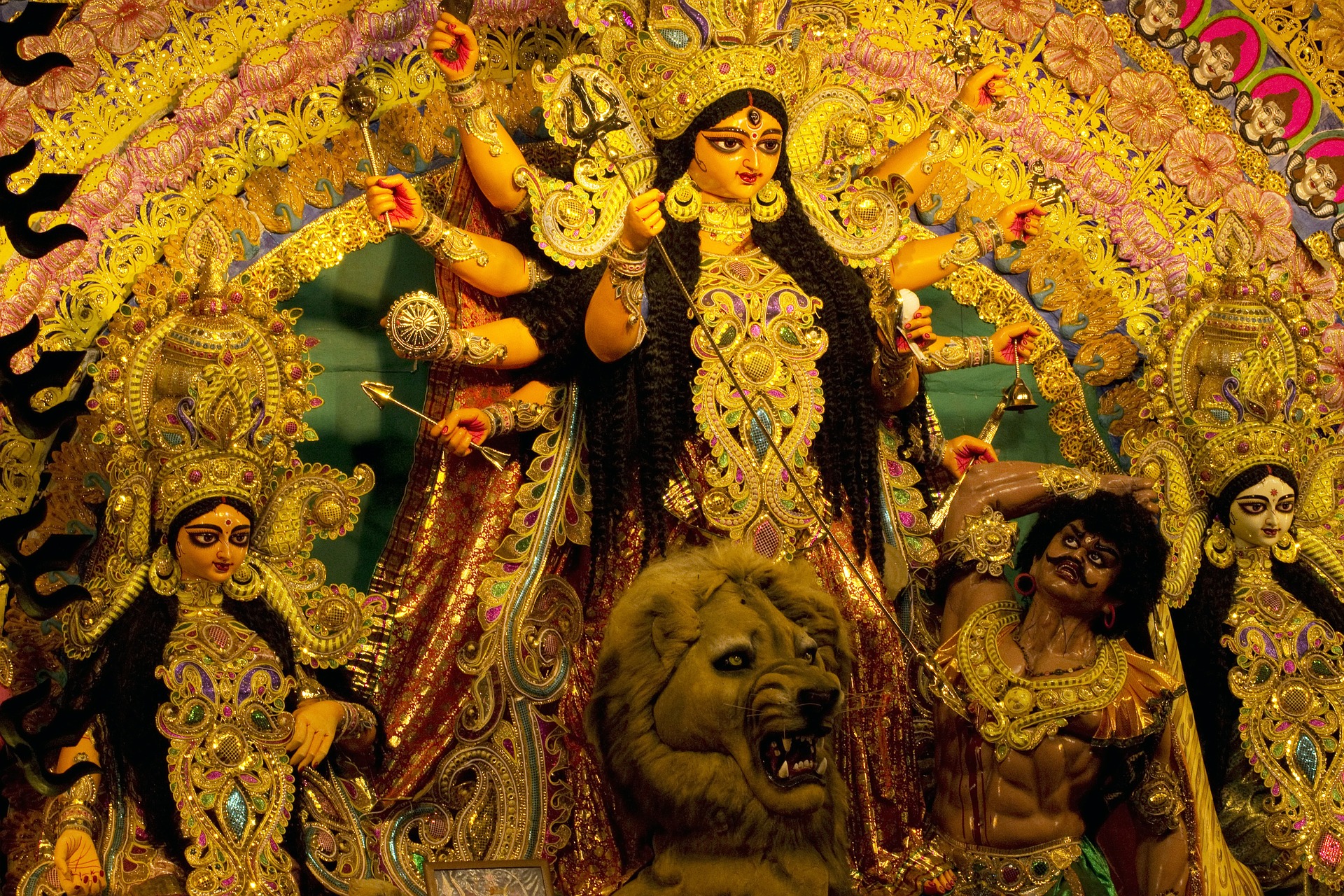
Obviously, the animal-headed gods of Ancient Egypt aren’t the human-headed gods of the Quraysh, thousands of years later.
Muhammad cosplays and preaches his early Islam, gets the story wrong, makes threats and then leaves, probably being chased away by the guards of the Quraysh elite.
Notice that even the translators of this passage recognise that this is addressed to Muhammad in verse 55 with: “So be patient, [O Muḥammad].” All this nonsense and drivel from Muhammad, in yet another corrupt and repeated story about Moses, where Muhammad’s vanity compels him to insert himself into the setting without really understanding that he’s the originator of Islam, no one else. No wonder the Quraysh thought Muhammad was a mad poet, crazy. And of course, none of Muhammad’s prophecies here ever came true from Allah.
Islam came from Petra, Jordan, and the Muslims moved to Saudi Arabia. The Ancient Egyptians never worshipped the imaginary Allah; they were too busy worshipping their real pharaohs and imaginary animal-headed gods.
The best replacement for this passage is: “”, the empty sentence.

 Koran Contradiction
[…] Qur’an 40:23-56 […]
LikeLike