
34:15 There was for [the tribe of] Saba’ in their dwelling place a sign: two [fields of] gardens on the right and on the left.
[They were told], “Eat from the provisions of your Lord and be grateful to Him. A good land [have you], and a forgiving Lord.”
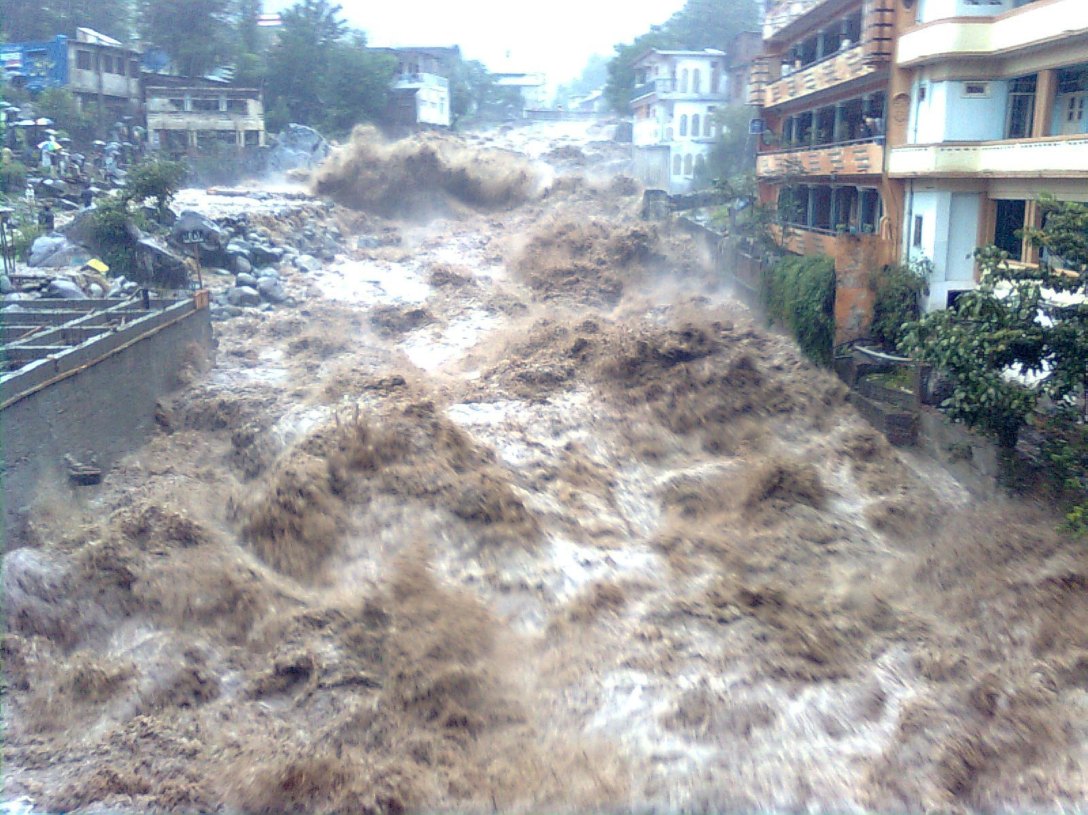
16 But they turned away [refusing], so We sent upon them the flood of the dam, and We replaced their two [fields of] gardens with gardens of bitter fruit, tamarisks and something of sparse lote trees.
17 [By] that We repaid them because they disbelieved.
And do We [thus] repay except the ungrateful?
18 And We placed between them and the cities which We had blessed [many] visible cities.
And We determined between them the [distances of] journey, [saying], “Travel between them by night or by day in safety.”
19 But [insolently] they said, “Our Lord, lengthen the distance between our journeys,”
and wronged themselves, so We made them narrations and dispersed them in total dispersion.
Indeed in that are signs for everyone patient and grateful.
Koran 34:15-19
Muhammad commits shirk with: “We”, “Us” or “Our”, placing Allah as a companion to himself, showing that Allah is incoherent, imaginary, and fictional, and so Islam is incoherent with monotheism, thus Islam is contradictory and false.
Muhammad includes the imperfect words of imperfect others, an interlocutor who is only in Muhammad’s mind, instead of the perfect words of the perfect Qur’an from perfect Allah. This means that Muhammad’s recitation, Muhammad’s Koran, is not from Allah, which means Allah, Muhammad, Islamic doctrine, Islam, and Koran are incoherent and false.
Note that “two [fields of] gardens” are made by humans, not by Allah. If you’re not sure about this, ask Allah to make a garden in the desert.
Note that there’s no messenger to the Saba – instead an anonymous person speaks:
Eat from the provisions of your Lord and be grateful to Him. A good land [have you], and a forgiving Lord.
Anonymous Muhammad.
Is it Allah speaking to these people? Obviously not as the Quraysh never had Allah speaking to them. If it’s a prophet of Allah, why isn’t he named? And if it’s a prophet of Allah, why doesn’t he prophesy the doom of the Saba for their “turned away [refusing]” to worship Allah. And, how do they know to worship Allah, when their gardens were planted by them, and their dam, to store and regulate rainwater, was also made by them? None of this came from Allah.
Then see the evil of Allah, “We” and Muhammad with: “We sent upon them the flood of the dam,” – where’s the prophecy of the Saba’s prophet of Allah? This is evil sent without a prophecy first.
And look at the next evil of Allah or We with: “We replaced their two [fields of] gardens with gardens of bitter fruit, tamarisks and something of sparse lote trees.” How long does a tree, “sparse lote tree” take to grow? 10, 20, 30 years? Seems more like the Saba people abandoned their land due to the flood destroying their gardens, and this is why they were dispersed.
Verse 17 is a rhetorical question that shows that the prophets of Allah are worthless.
In verse 18, Muhammad claims that Allah places cities when he doesn’t. It’s humans that build cities, where they choose, not where Allah says. If you’re not sure of this, look up the history of your village, town or city and uniformly, you’ll find that the location was the choice of the founders of your community, not Allah.
Also in verse 18, Muhammad claims Allah makes the journeys between cities. Allah doesn’t. It’s humans that make journeys between cities, and often make routes and roads between cities. None of this is done by Allah.
In verse 19, again notice the lack of a prophet or messenger from Allah. Instead, the people of Saba talk directly to Allah, according to the lies of Muhammad. You know that’s impossible. Try talking to Allah and ask him to shorten your distance of travel (the opposite of the Saba people). Nothing happens. Allah is imaginary. Muhammad simply lied to make a horror story to frighten his Muslims into obeying him.
With reflection, you can see that Muhammad forgets about the role of prophet or messenger communicating from imaginary Allah to the Saba people and back again. This mistake, which Muhammad made several times, condemns Muhammad as a liar, so showing Muhammad was a false prophet, for a false god, Allah, for a false religion, Islam, without even a false book, the Koran.
The best replacement for this passage is: “”, the empty sentence.

 Koran Contradiction
[…] Qur’an 34:15-19 […]
LikeLike