
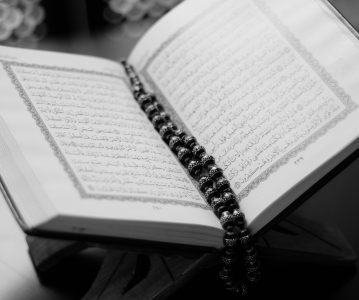

32:18 Then is one who was a believer like one who was defiantly disobedient? They are not equal.
19 As for those who believed and did righteous deeds, for them will be the Gardens of Refuge as accommodation for what they used to do.
20 But as for those who defiantly disobeyed, their refuge is the Fire.
Every time they wish to emerge from it, they will be returned to it while it is said to them, “Taste the punishment of the Fire which you used to deny.”
21 And We will surely let them taste the nearer punishment short of the greater punishment that perhaps they will return [i.e., repent].
22 And who is more unjust than one who is reminded of the verses of his Lord; then he turns away from them?
Indeed We, from the criminals, will take retribution.
Koran 32:18-22
Muhammad commits shirk with: “We”, “Us” or “Our”, placing Allah as a companion to himself, showing that Allah is incoherent, imaginary, and fictional, and so Islam is incoherent with monotheism, thus Islam is contradictory and false.
At first glance, Muhammad’s categories are incoherent, comparing “believer”, not with a disbeliever, but with “defiantly disobedient”. The word “believer” refers to believers in Allah and Muhammad, obedient to Allah and Muhammad. The “defiantly disobedient” are those who believe in Allah and are “defiantly disobedient” to Muhammad. So obviously Muhammad is referring to the pagan Quraysh, “who was defiantly disobedient”, who was also a believer in Allah, the chief idol of the Quraysh polytheism:
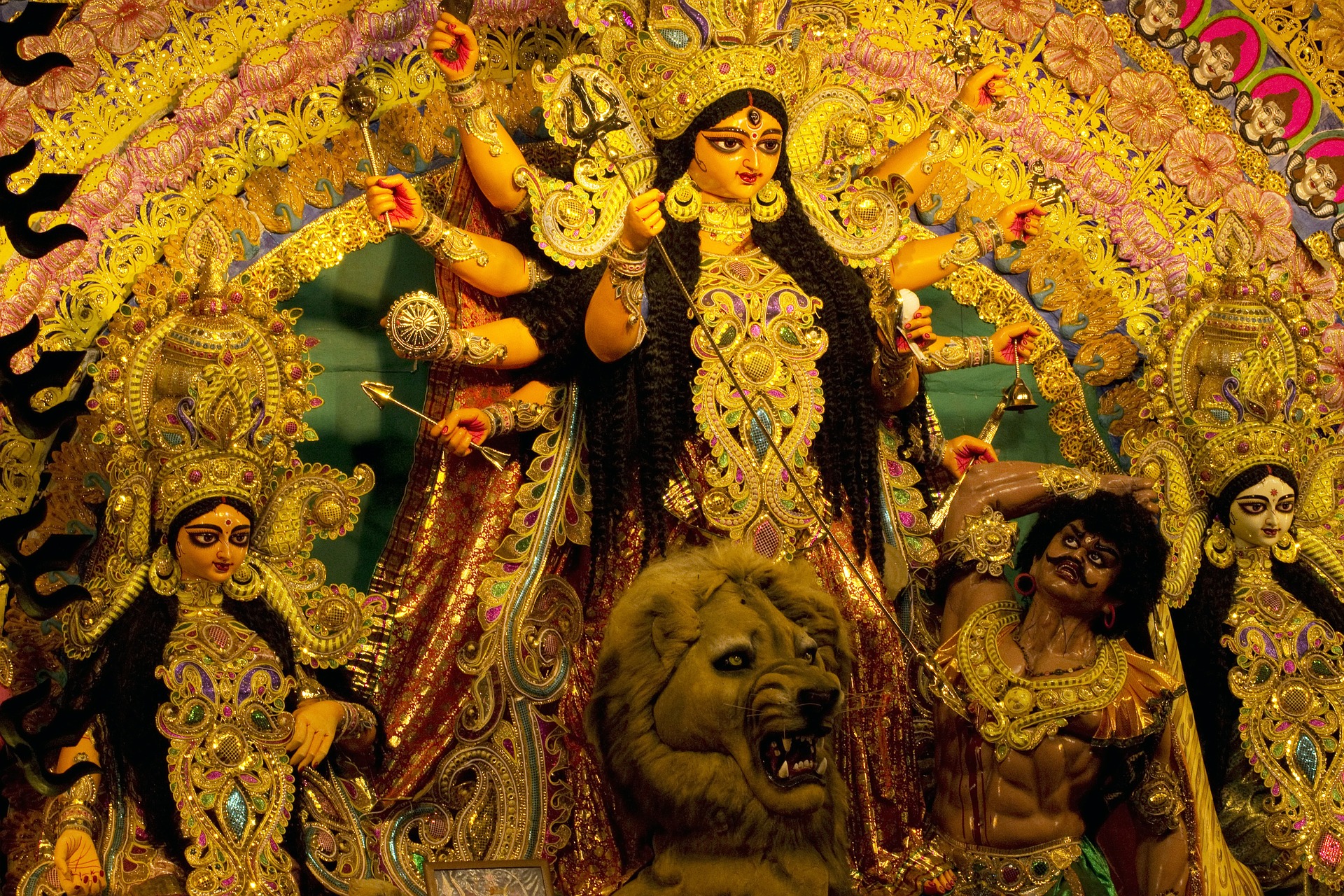
Muhammad wanted the Quraysh, his tribe, to be obedient to him, while the Quraysh rejected him, and for good reasons, too:
38:4 And they wonder that there has come to them a warner from among themselves. And the disbelievers say, “This is a magician and a liar. 5 Has he made the gods [only] one God? Indeed, this is a curious thing.”
Koran 38:4-5
Verse 19 is Muhammad’s carrot for his Muslims, a promise of a magic garden of rest. Muhammad and his men never get this reward, being dust in the desert for 1400 years.
Verse 20 is Muhammad’s stick for his Muslims and a revenge fantasy, a hell of fire for those who didn’t obey him. None of Muhammad’s enemies suffer such a fate. Like Muhammad, they’re dust in the desert for 1400 years. Such threats show the lack of power of Allah and the lack of good arguments from Muhammad and imaginary Allah.
Verse 21 is a failed prophecy of Muhammad and Allah (or Jibril): “We will surely let them taste the nearer punishment” – note that the Quraysh were attacked by Muhammad and his bandits, not attacked by Allah. The Quraysh were forced to convert to being Muslims. Is being a Muslim the “taste the nearer punishment”? Obviously not, unless you regard being Muslim as being in Hell.
Notice that verse 22 confirms that the “defiantly disobedient” is the pagan Quraysh who already worshipped Allah with “the verses of his Lord”. The rhetorical question is also pointless for Allah to say because Allah didn’t know that the Quraysh were later attacked by Muhammad and his bandits, not attacked by Allah, and the Quraysh were forced to convert to being Muslims.
Naturally, a passage about the Quraysh, their polytheism and their refusal to obey Muhammad and leave their polytheism for Muhammad’s modification of pagan polytheism is obviously out of place with the imaginary perfect words of the perfect Qur’an from perfect Allah. Obviously, Muhammad was a false prophet for a false god, Allah, for a false religion, Islam, without even a false book, the Koran.
The best replacement for this passage is: “”, the empty sentence.

 Koran Contradiction
[…] Qur’an 32:18-22 […]
LikeLike