
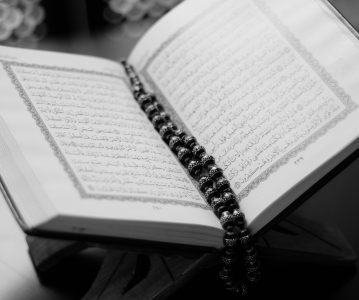
23:68 Then have they not reflected over the Qur’an, or has there come to them that which had not come to their forefathers?
69 Or did they not know their Messenger, so they are toward him disacknowledging?
70 Or do they say, “In him is madness?”
Rather, he brought them the truth, but most of them, to the truth, are averse.
71 But if the Truth had followed their inclinations, the heavens and the earth and whoever is in them would have been ruined. Rather, We have brought them their message, but they, from their message, are turning away.
72 Or do you, [O Muhammad], ask them for payment? But the reward of your Lord is best, and He is the best of providers.
73 And indeed, you invite them to a straight path.
74 But indeed, those who do not believe in the Hereafter are deviating from the path.
75 And even if We gave them mercy and removed what was upon them of affliction, they would persist in their transgression, wandering blindly.
Koran 23:68-75
Muhammad, in his Koran, addresses a sentence, verse, or passage to “Anonymous They”, with “they”, “them”, “he”, “your”, “the people”, and so on, without naming them. For more, read Anonymous They.
Muhammad commits shirk with: “We”, “Us” or “Our”, placing Allah as a companion to himself, showing that Allah is incoherent, imaginary, and fictional, and so Islam is incoherent with monotheism, thus Islam is contradictory and false.
This passage is addressed to Muhammad from Muhammad pretending to be Allah. As such, this means that this passage is not the perfect words of the perfect Qur’an from perfect Allah. Thus, Allah is false, imaginary, and fictional, which means Muhammad, the Koran, Islamic doctrine, and Islam are nonsensical and false.
Note that Muhammad seems to claim that the Koran is available to the Quraysh: “reflected over the Qur’an”. This is a lie, as here Muhammad is, adding to his recitation, his Koran, thus showing it’s not from Allah.
Note the several rhetorical questions posed by Muhammad pretending to be Allah, to Muhammad.

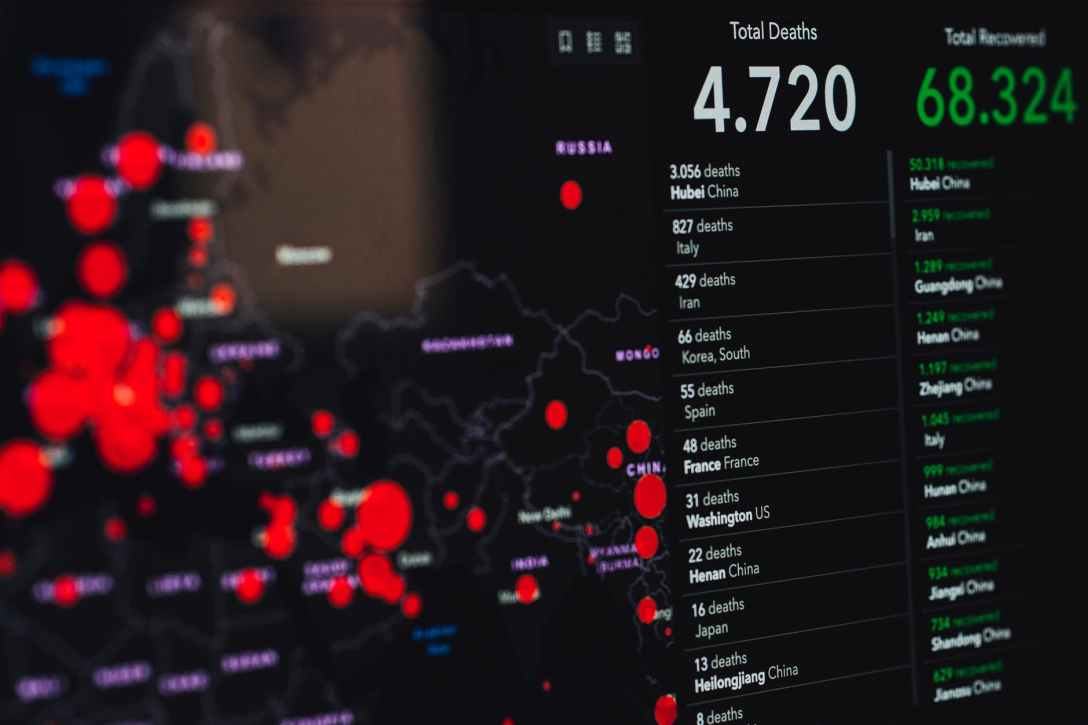
Notice this: “what was upon them of affliction”. This passage, along with the previous passages, seem to be mentioning what seems like either a famine or perhaps a plague possibly resulting from famine? Notice that Muhammad supposedly with omniscient Allah is unable to make clear what this “affliction” is. This immediately contradicts the notion of the omniscience of Allah and the wisdom of Muhammad, showing both are false, which means the Koran and Islam are false.
Worse, consider, what is the message of Allah about Mecca? To the Quraysh? Is it to obey Muhammad Allah, or else get an “affliction”? The affliction seems to be “punishing” the Quraysh already: “what was upon them of affliction”. So, what’s the point of the message, when the punishment of the message has already happened? This shows that Allah’s omniscience is false and Muhammad lacks wisdom.

Then notice the depression and evil of Muhammad (or We) with: “And even if We gave them mercy” – “they would persist in their transgression, wandering blindly.” Presumably, this is Allah (or We) inflicting punishment upon the Quraysh, which means that Muhammad is no longer a messenger. His job is done, the “affliction” is upon the Quraysh, and Allah or We will not give mercy. Thus, Islam ended, even before Muhammad died. Islam ended 1400 years ago.
Or a better explanation is that Muhammad in the earlier chapter had all the increase in the herds of the Quraysh slaughtered to his cattle god, Sin, and wasted all the meat. The Quraysh then had no meat to eat, thus the “affliction” of starvation and perhaps famine and plague. Muhammad then blames the “affliction” on the Quraysh for not obeying him, and shows his evil, and weakness in not being able to communicate with the Quraysh, and can’t remove the “affliction”. Muhammad’s stupidity and insanity are on display.
And let’s remember that Petra was abandoned. No more “need” of Islam.

The best replacement for this passage is: “”, the empty sentence.

 Koran Contradiction
[…] Qur’an 23:68-75 […]
LikeLike