
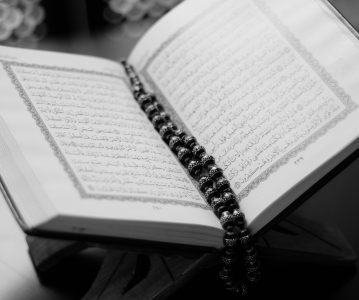
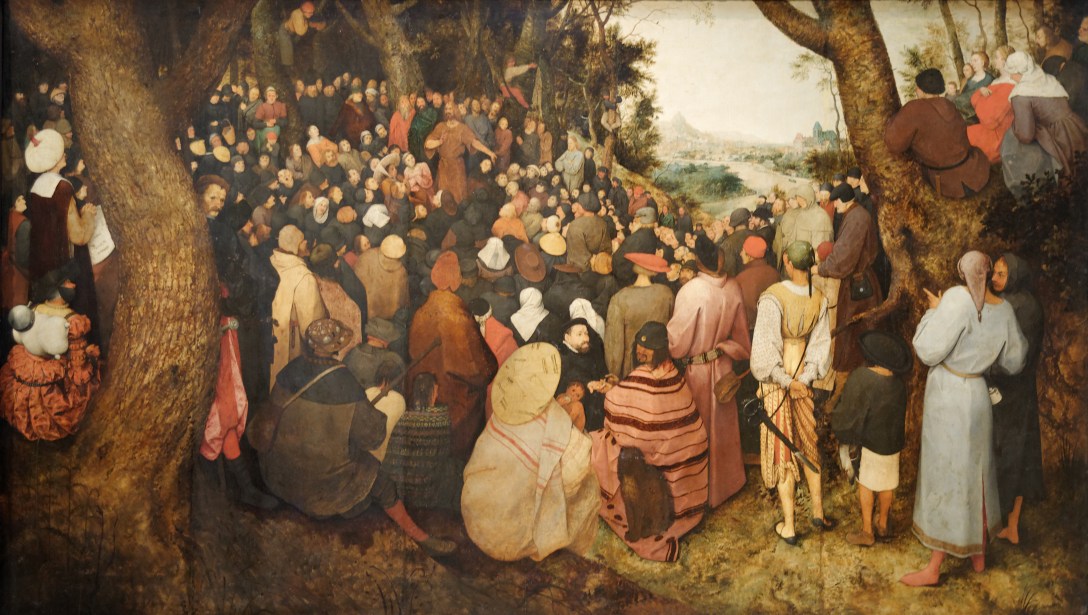
19:12 [Allah] said, “O John, take the Scripture with determination.”
And We gave him judgement [while yet] a boy 13 And affection from Us and purity, and he was fearing of Allah 14 And dutiful to his parents, and he was not a disobedient tyrant.
15 And peace be upon him the day he was born and the day he dies and the day he is raised alive.
Koran 19:12-15
This is about all that Muhammad has of John, John the Baptist. In contrast, the Gospel in the Bible has lots more:
I won’t copy-paste that all here, as they’re too long, and these 4 Koran verses seem like Muhammad’s really bad summary.
But, Infidel, you stated earlier that the Bible has one story per prophet, now you have FOUR!!!! That’s still correct, the Gospel of Matthew has one story, the Gospel of Mark has one story, the Gospel of Luke has one story and the Gospel of John has one story. Four different authors, four totally different stories, one story per author, reflecting the oneness of GOD. The Bible has many authors and isn’t from GOD. Same with Torah, many authors, all not from YHWH.
Note the correction the translator has to add, to make Muhammad’s story more correct: “[Allah] said”. The scholars in Tafsir Ibn Kathir, 19:12, instead have:
(It was said to his son)
Tafsir Ibn Kathir, 19:12
Note the lie by Muhammad: “take the Scripture” – John didn’t have “Scripture” from Allah at all.
Muhammad continues to lie: “We gave him judgement [while yet] a boy”. Obviously, John was educated by his mother, father and his community, with the Torah, not by imaginary Allah who shows he’s plural with “We” – Muhammad is Allah.
Muhammad lied: “affection from Us”. There was no affection from Allah. In the stories of John the Baptist, he gets his head cut off. You know, a bit like this idol has its head smashed off:
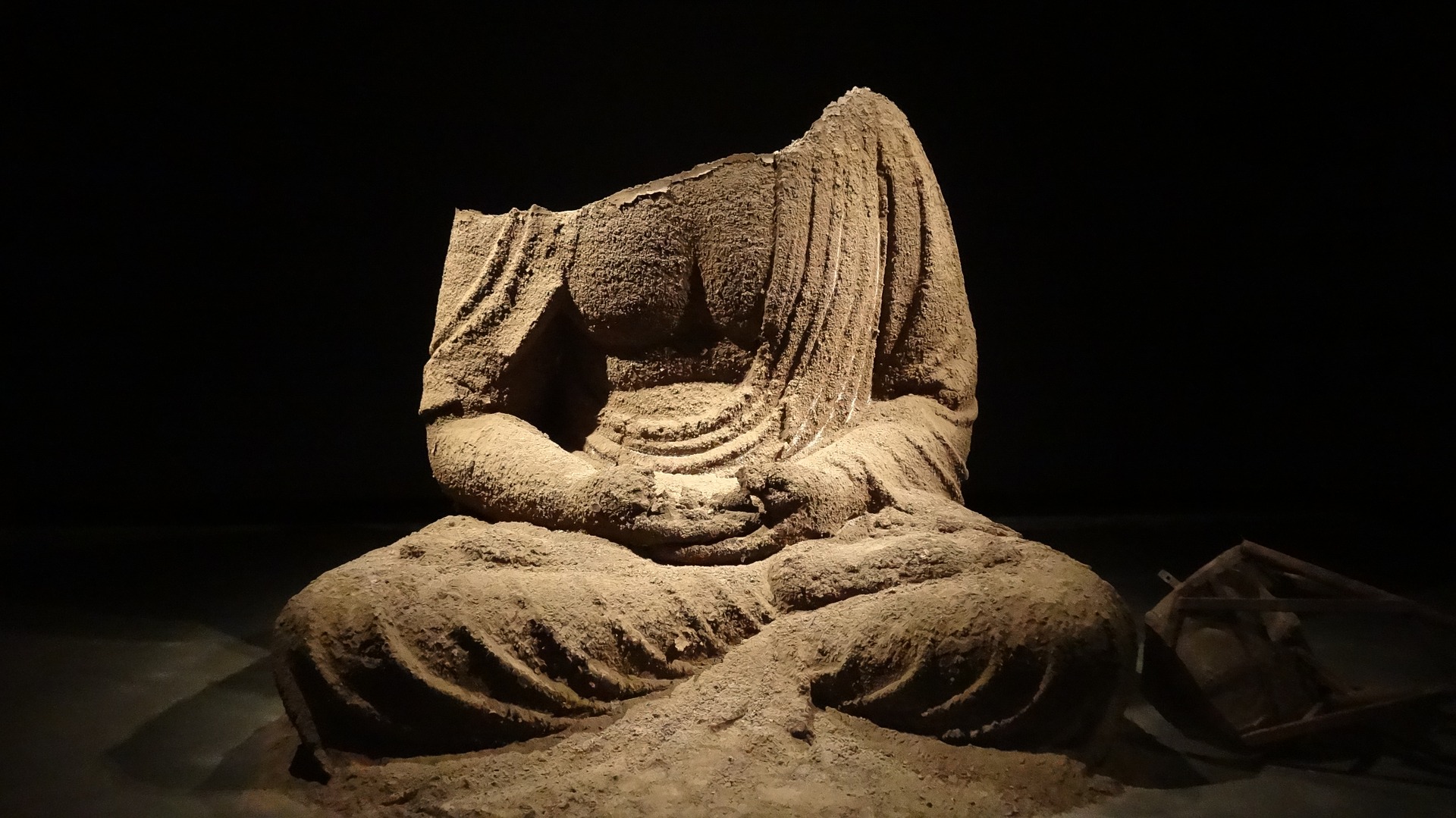
Muhammad lied: “he was fearing of Allah”. No, John loved YHWH/GOD instead.
Muhammad admits: “And dutiful to his parents,” which is a virtue from the 10 commandments, that John’s parents taught him, which Muhammad is unable to put into Koran correctly.
Muhammad wastes time with: “he was not a disobedient tyrant.” What’s the point of that? The scholars in Tafsir Ibn Kathir, 19:12 have it as:
and he was not arrogant or disobedient.
Tafsir Ibn Kathir, 19:12
Muhammad wastes more time with: “15 And peace be upon him the day he was born and the day he dies and the day he is raised alive.” Isn’t this what is supposedly happening to everyone in Islam? So why bother having this specially described for John when it’s a normal part of Islam, the repeat Creation of everyone in the last hour? The scholars in Tafsir Ibn Kathir, 19:12 explain this as:
The loneliest that a man will ever feel is in three situations. The first situation is on the day that he is born, when he sees himself coming out of what he was in. The second situation is on the day that he dies, when he sees people that he will not see anymore. The third situation is on the day when he is resurrected, when he sees himself in the great gathering. Allah has exclusively honored Yahya, the son of Zakariyya, by granting him peace in these situations.
Tafsir Ibn Kathir, 19:12
Truly these scholars don’t think. No one remembers the day they were born. One can’t see people after dying. And even if the great repeat creation is true, then one can’t see one’s own self unless in a mirror. Does Allah provide mirrors at your birth, death and resurrection? Obviously not.
But, Infidel, they’re talking about the soul seeing its body! There are no souls in Islam. They’re only in Judaism and Christianity. For more, read “Koran – Soul“.
What I suspect has happened here, is that the scribes accidentally duplicated this passage from later, then later changed it, further corrupting this chapter of Muhammad’s Koran. See for yourself:
And peace be upon him the day he was born and the day he dies and the day he is raised alive.
Koran 19:15
And peace is on me the day I was born and the day I will die and the day I am raised alive.”
Koran 19:33
Ask yourself, why Allah/Muhammad/We is repeating the words of Jesus before they happened? So obviously scribal error, excused by the scholars of the tafsir.
The best replacement for this passage is: “”, the empty sentence.

 Koran Contradiction
[…] Qur’an 19:12-15 […]
LikeLike