


Then is He who is a maintainer of every soul, [knowing] what it has earned, [like any other]?
But to Allah they have attributed partners.
Say, “Name them. Or do you inform Him of that which He knows not upon the earth or of what is apparent of speech?”
Rather, their [own] plan has been made attractive to those who disbelieve, and they have been averted from the way.
And whomever Allah leaves astray – there will be for him no guide.
Koran 13:33
Muhammad spoke about Allah in the third person. This means this passage is not the perfect words of the perfect Qur’an from perfect Allah. Thus, Allah is false, imaginary, and fictional, which means Islamic doctrine and Islam are nonsensical and false.
Muhammad, in his Koran, addresses a sentence, verse, or passage to “Anonymous They”, with “they”, “them”, “he”, “your”, “the people”, and so on, without naming them. For more, read Anonymous They.
Muhammad Allah commands Muhammad to: “Say” or “Recite”. This means that this passage is addressed to Muhammad, not to all people. Thus, this passage can’t be in the perfect words of the perfect Qur’an from perfect Allah. As it is addressed to Muhammad, in his time and place, his context, this also means that this passage is locked to Muhammad’s context and can’t be in the context-free, perfect Qur’an from perfect Allah with all its perfect words. Thus, this passage is part of Muhammad’s recitation, Muhammad’s Koran, which means Islamic doctrine and Islam are incoherent and false, meaning Allah is incoherent, imaginary, fictional, and false.
The translation has the first sentence as: “Then is He who is a maintainer of every soul, [knowing] what it has earned, [like any other]?” Yet, in Tafsir Ibn Kathir, 13:33, the first sentence is:
Is then He (Allah) Who takes charge of every person and knows all that he has earned (like any other deity who knows nothing)
Tafsir Ibn Kathir, 13:33
Note the differences:
| SAHIH INTERNATIONAL | Tafsir Ibn Kathir, 13:33 |
| Then is | Is then |
| is a maintainer of | takes charge of |
| every soul | every person |
So obviously there are some differences here. I suggest that Sahih International’s meaning of “soul” is the old equivalent to “people” or “person”, as used in the Morse code: SOS or Save Our Souls. So no literal souls here, just people or persons, instead. There’s no concept of “soul” in Islam.
Muhammad demands: “Name them” about these “partners” of Allah. OK so let’s check with Muhammad:
53:19 So have you considered al-Lat and al-‘Uzza? 20 And Manat, the third – the other one?
Koran 53:19-20

The fact I’m able to quote Muhammad to answer Muhammad’s demand, really shows that Muhammad didn’t design his theology, but instead, he “evolved” Islam as he went along in his life, never realising that his recitation, his Koran, would be eventually be written down and still used long after his death, the death of Allah and the death of Islam. Thus showing that Allah and Islam are false.
This verse is a rant against the Quraysh, showing Muhammad’s incompetence and the inability of Allah to convince the Quraysh that Allah no longer needs his three daughters and his wife, despite Allah’s idol and his three daughters’ idols and his wife’s idol all together in one big happy family of idols representing a false god and his false wife and false daughter goddesses. As such, the inability of Allah to remove idols shows that Muhammad is a false prophet for a false god. Muhammad should have tested one more god, to reveal that Allah was also false, just like Abraham did, in Genesis Rabbah 38:13. In other words, instead of moving from polytheism to worship of Allah alone (also polytheism), Muhammad should have become an atheist first, as idols that are supposedly gods, aren’t gods. All idols, including Allah.
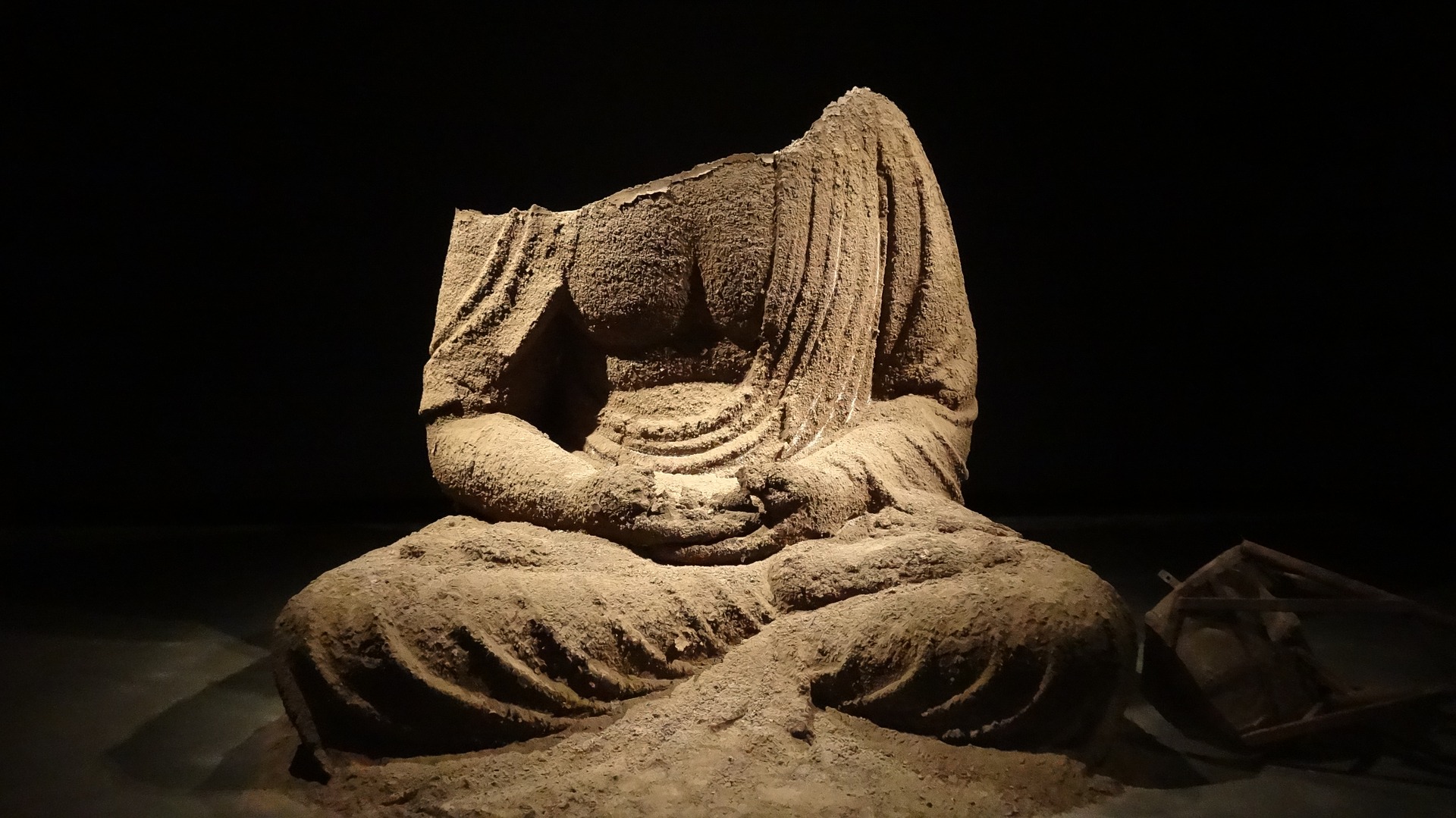
Muhammad’s inability to be a messenger to his people, the Quraysh is demonstrated by Muhammad, showing he’s a false messenger, false prophet and false warner.
The best replacement for this passage is: “”, the empty sentence.

 Koran Contradiction
[…] Qur’an 13:33 […]
LikeLike